Beautiful but Toxic: Poisonous Plants found in the forests of India
India is known for the diversity in its flora and fauna. Our jungles are the cradle of biodiversity and are home to numerous plant and
Leveraging responsible tourism in the conservation of local communities and wildlife of the region. Ensuring minimum carbon and water footprints in the area while providing a seamless and memorable experience for our guests.
1893 – 1970
Frederick Walter Champion, born on August 24th 1893, in UK, was a British forester, who worked in British India and East Africa. In the UK and India, he became famous in the 1920s as one of the first wildlife photographers and conservationists.
Frederick Walter Champion grew up in a family of nature lovers. His father was the English entomologist George Charles Champion, while his brother, Sir Harry George Champion was also a forester, known for classifying the forest types in India.
Frederick Walter Champion travelled to India in the year 1913 and served the Police Department of East Bengal until 1916, after which he was commissioned into the British India Army Reserve of Officers. After serving the Army and returning from war, he joined the Imperial Forestry Service in the United Provinces of India and became deputy conservator of Forests. Owing to his experiences during the war, he abhorred shooting and killing, and blisteringly criticized sport hunting.
For Frederick Walter Champion, shooting meant capturing wildlife with his camera in the Sivalik Hills. In the 1920s, he developed cameras triggered by tripwires.
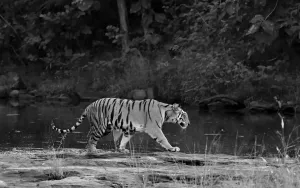
With the help of a flashlight, he clicked dozens of remarkable photographs in the night, making them the first few tigers, leopards, sloth bears, dholes, and other wildlife to be captured on camera. Photographing tigers helped him tell them apart based on their different stripe patterns.
Frederick Walter Champion was a passionate conservationist before it became fashionable. He campaigned hard for the protection of tigers and their forest habitats, “championing” the idea of limiting gun licenses, stopping motor cars
from entering Reserved Forests, and reducing rewards for killing wildlife. His commitment towards conservation inspired his friend, Jim Corbett, among other hunter-turned-conservationists. Together with Corbett, he was a founding member of India’s first National Park established in 1935, named Corbett National Park.
After Independence, Frederick Walter Champion moved to East Africa, where he continued to work as a Divisional Forest Officer for Kilimanjaro and Serengeti until he retired.

India is known for the diversity in its flora and fauna. Our jungles are the cradle of biodiversity and are home to numerous plant and

After our flight back to New Delhi Marjorie and I said goodbye to Bill and Sue, who were continuing on to Varanasi and Amritsar, two

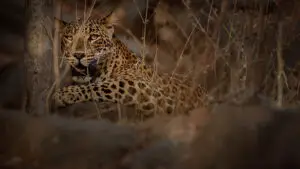
Our next stop was Pench National Park and Tiger Reserve, or as we started calling it, Pench Leopard Reserve. You’ll understand why in a minute.