Big Cats of India Tour
- Why choose Big Cats of India Tour?
Journey Highlights & Overview
India is the only country in the world with five species of big cats, and if we add the recently reintroduced cheetah, then the count will go to six species. Lions, tigers, common leopards, snow leopards, and clouded leopards are the big cat species in India, distributed from the arid west to the evergreen forests of Northeast India and from the high Himalayas to the mangroves of Sundarbans and from the tropical rainforests of the Western Ghats to the deciduous forests of central India. Big cats of India occupied almost all types of terrestrial ecosystems as a top predator.
This tour will take you to the part of the central Indian highlands and the Aravalli mountain range, where tigers are adapted to the tourist vehicles and are known for their frequent daytime sightings in a world-famous park, Ranthambore Tiger Reserve, and somewhere in the cultural landscape of Rajasthan, you will find a place where common leopards live in complete harmony with the local community without any conflict, Bera, the first leopard conservation reserve of India. Later, you will be visiting the extreme western portion of India, where you can witness the pride of the Asiatic lion in their natural habitat. In the second part of this tour, you will travel to the high Himalayas, where you will go on a snow leopard expedition. This itinerary will require you to be adapted to the high altitude, low oxygen level, and extreme cold, where the temperature will go down below -20 degrees frequently.
At all these places you will stay in comfortable and eco-friendly lodges, and all your wildlife safaris in India are led by an expert and knowledgeable naturalist.
Though the tour is about the big cats of India, it also takes you to the symbol of love, the Taj Mahal in Agra and Jaipur, known for its historical and cultural richness.
- Plan this journey
Get a quote for this journey
A senior naturalist reviews every enquiry and responds within 6 hours. You’ll receive a tailored itinerary, not a generic brochure.
- Destinations covered on this tour
Sneak a peak into the trail
At Nature Safari India, we believe your only job should be to immerse yourself in the magic of India on your tour.
From booking internal flights and securing train reservations to arranging private road transfers and handling any unique, special requests along the way, we take care of every logistical detail.
Leave the planning to us so you can simply focus on enjoying your unforgettable journey.
Itinerary for Big Cats of India Tour
- Day 1
Arrive in New Delhi (By Flight)


- Day 2
New Delhi – Agra
Our representative will meet you at your hotel after breakfast and introduce you to our driver. You will be taken to Agra by car. You will travel 220 km in around four hours on this trip. When you get there, check in at the hotel. After that, you go to the red sandstone Agra Fort, which is shaped like a crescent on the banks of the Yamuna River.
It has 20-meter-high walls that are hard to get through and a 12-meter moat between them. Three Mughal emperors—Akhbar, Jehangir, and Shah Jahan—built this huge building in the style of Hindu and Muslim architecture. [The Taj is closed on Fridays].
Stay in Agra overnight.
- Day 3
Agra – Ranthambore
You go to see the famous Taj Mahal at dawn, which is considered the best view of the Taj Mahal. The Mughal Emperor Shah Jehan built it in the 17th century for his wife, Mumtaz Mahal. It was a place where Persian, Muslim, French, Italian, and Hindu architecture could all come together.
This white mausoleum has stood beautifully for hundreds of years.
After breakfast, drive to Ranthambore National Park, which is your first stop in your big cats of India tour. This is a 265-kilometer drive that will take you roughly five hours. After reaching Ranthambore, check in and then go to lunch. After lunch, go on your first tiger safari in India in the famous Ranthambore National Park.
Ranthambore is in the state of Rajasthan and is made up of different protected areas that have different conservation histories. These areas are connected with the main national park through the corridors and forests and together form the Ranthambore tiger reserve. Ranthambore National Park, Keladevi Sanctuary, and the Sawai Madhopur Sanctuary are three separate protected areas of the reserve.
Dinner and overnight at the lodge


- Day 4 & 5
In Ranthambore National Park
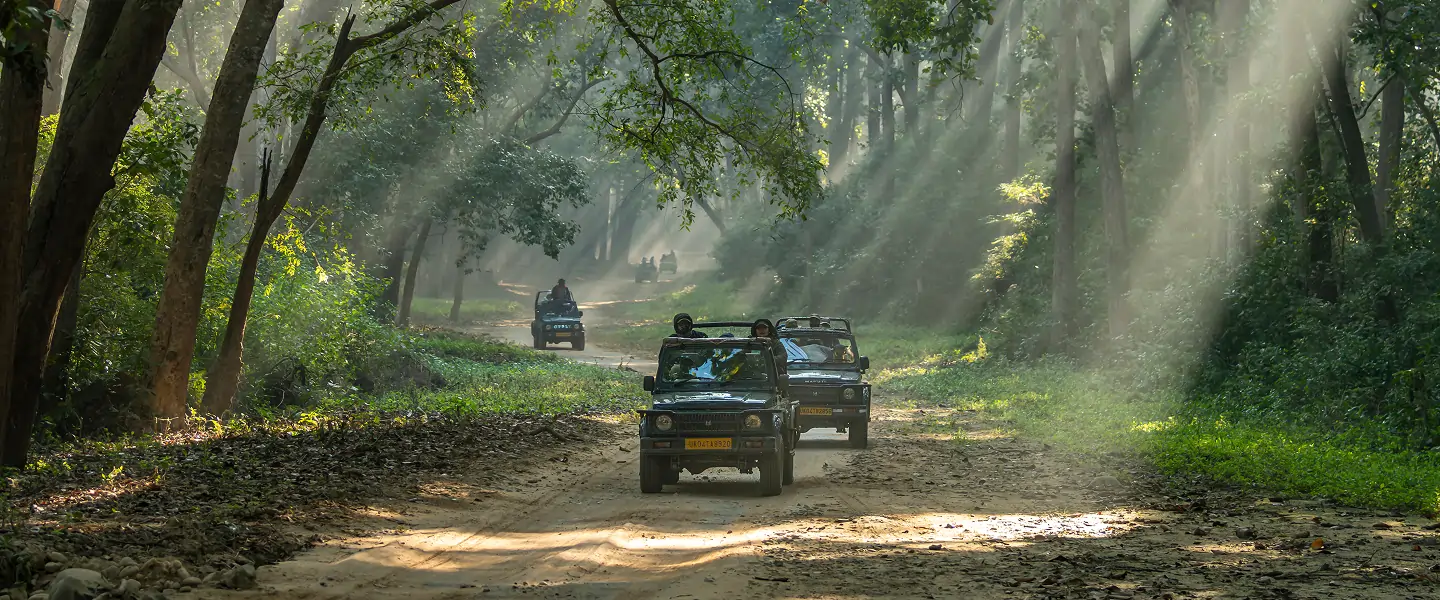
Tiger safaris at Ranthambore National Park in the morning and at night. You will have all your meals and stay overnight at the resort.
Ranthambore is in an area that is recognized as the hub of birds, in addition to plants and animals. Ranthambore is a birdwatcher’s delight with 300 different kinds of birds. Some interesting birds that live in the area are the Large Cormorant, Painted Spurfowl, Bronzed Winged Jacana, Sandpiper, Kingfisher, Nighjar, Painted Sandgrouse, Great Horned Owl, and many species of migratory birds that come to Ranthambore and the surrounding areas from their nesting grounds in the Northern Himalayas during the winter.
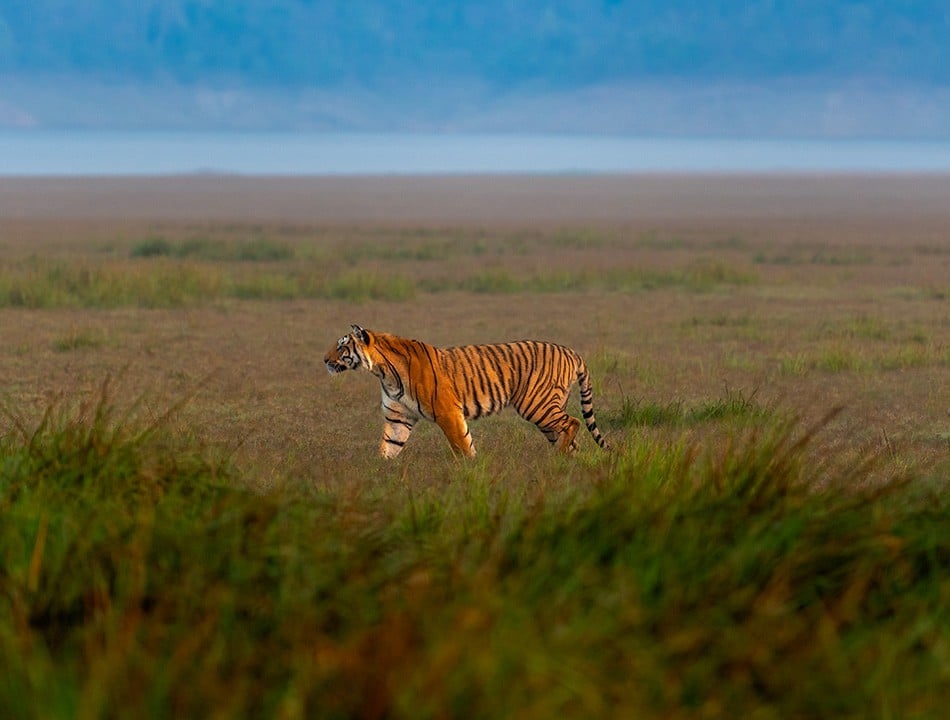
Ranthambore tiger reserve covers 1411 square kilometers. The name comes from the thousand-year-old fort that still stands tall over the forest. The area has rocky hill crests that drop down to wide valleys between the Aravali and Vindhya ranges. There are also water springs and fruit trees scattered throughout. Ranthambore is a very rare and unusual place where a natural present meets a historical past. It is well known for the frequent daytime sightings of the tigers.
Dotted across the landscape are the crumbling ruins of the past glory that has been witnessed by Ranthambore; palaces and old guard posts encompass the magical and ethereal quality of this great wilderness
- Day 6
Ranthambore – Jaipur
Morning jeep safari to the national park. Post the morning safari, drive to Jaipur. This is a 180 km journey and should take you about 03 hours on the road. On arrival check in at the hotel and take the rest of the day at leisure.
Painted in the color of Hospitality, the pink city of Rajasthan, Jaipur, is the epitome of Rajput culture. The land of fairy-tale palaces, rugged fortresses perched on barren hills and broad avenues, is extremely photographic and picturesque. The first planned city of its time, Jaipur is time-bound by a formidable wall. Overnight stay at Jaipur


- Day 7
Jaipur – Bera
After breakfast, drive from Jaipur to Bera. This journey will cover 390 km (07 hours) through the countryside to reach Bera. Located in Rajasthan, it is close to Jawai Dam. Known for its magnificent sightings of leopards, the experience of sighting one is unique and different. It is not a jungle or a forest; instead, you will sight Leopards in the rocky outcrops of the village.
Home to plenty of mammals and birds, Bera is an attraction for wildlife enthusiasts to spot the elusive Leopard, Blue Bull, Crocodiles, Striped Hyena, Pelican, flamingos, Graylag Goose, Robin Accentor, the Demoiselle Crane, and Bar-headed Goose, to name a few.
Evening safari, dinner, and overnight at Bera.
- Day 8 & 9
In Bera
Followed by breakfast, experience the golden mornings of Rajasthan with wildlife sightings. Morning & afternoon Safari; also, you can see the village life in this remote corner of Rajasthan.
All meals at the lodge.
Not only Leopards! Another magnificent wildlife habitat Bera is famous for is Crocodiles. They are 15-foot giants. They could be as active as in their hunting process even if they are doing nothing. They don’t move much and are found basking on a piece of rock; hence, they sometimes create a camouflage with the surroundings of the reservoir, and you have to focus on the camera or binoculars as you see them from a distance. They sunbathe for the entire day, and whenever hungry, they simply dive into the reservoir full of fish


- Day 10 & 11
Bera – Ahmedabad – Gir National Park
In the morning, go on a safari to Bera, and then drive to Ahmedabad. It is 290 kilometers long and will take about 5 to 6 hours to drive. When you get there, check in at the hotel. Stay at the hotel overnight.
The next day, after breakfast, get in your car and head to Sasan Gir National Park. It will take you roughly 6 to 7 hours to drive this distance from Ahmedabad, which is 350 km. When you get there, check in at the lodge. Lunch at the lodge.
Go on a luxury lion safari in the afternoon to the national park. Dinner and a night at the resort.
- Day 12 & 13
In Gir National Park
Gir National Park is the last refuge of the Asiatic lion, a subspecies. Its conservation started when only a few lions were left, and hunting was stopped in the 19th century by the Nawab of Junagarh. This effort marked a conservation success story in the conservation history of Asiatic lions in India. Today, there are more than 800 lions in the Gir landscape. Apart from the lions, the park is known for its leopards, antelopes, different species of birds, and reptiles. You will do a morning and an afternoon safari to find these majestic predators in the jungle.
Take the morning jeep safari to the park, and after you will drive down to the Rajkot Airport to catch an internal flight back to New Delhi. On arrival at New Delhi, you will be met by our representative, who will assist you with check-in at the Hotel in New Delhi. Overnight at the Hotel


- Day 14
Gir – Rajkot – New Delhi
Take the morning jeep safari to the Park, post which you will drive down to the Rajkot Airport to catch an internal flight back to New Delhi. On arrival at New Delhi, you will be met by our representative, who will assist you with check-in at the Hotel in New Delhi. Overnight at the Hotel.
- Day 15
New Delhi - Leh
After breakfast, go to the airport to catch a flight to the Leh. It is not allowed to take pictures at Leh airport because it is a military airport. When you get there, you will be taken to the hotel, which is only half an hour from the airport. There is a jump of more than 3000 meters in altitude in a short amount of time when you fly from Delhi to Leh. This is why acclimatization is so vital for everyone flying in this area. The first day in Ladakh is spent getting used to the low oxygen levels.
To help you get used to things better, think about these tips:
• Don’t climb stairs or do hard things.
• Make sure you drink enough water to stay hydrated; hot water is best.
• Don’t take a shower on the first day.
• Don’t nap during the day to avoid having trouble sleeping at night.
- Rest is important, but it’s okay to stroll slowly.
• If you feel sick or throw up, tell the front office right away.
• Tell someone if you feel bad or have any strange symptoms.
Following these measures can make it easier for you to get used to your new surroundings.
Dinner and a night at the lodge.


- Day 16
In Leh
This day in Leh will be full of cultural experiences and time spent in nature, which will help you get used to the area even more. Since Leh is so high up, spending another day here will help you get ready for the even higher places you’ll see next.
You start your day by going to the Thiksey Monastery, which is the biggest monastery in Leh. This amazing building, which looks like the Potala Palace in Lhasa, Tibet, is a peaceful and spiritually enriching place to visit. You’ll see a lot of Tibetan Buddhist culture, art, and history as you walk through its halls and gardens.
After visiting the monastery, you’ll do your first outdoor activity in Leh: going to the banks of the Indus River. This peaceful place is a birdwatcher’s paradise, and you might even see the rare Ibisbill and other native birds. The time spent by the river not only connects you with the unique avian life of the region but also offers moments of peaceful reflection amidst the natural beauty of Leh.
You’ll go back to your hotel after a full day of exploring and learning. You can relax and recharge for the rest of the day, or you can take a leisurely walk through the adjacent market. A trip to the market gives you a taste of life in Ladakh. You may buy handmade souveni.
Breakfast, lunch, dinner, and overnight at the lodge.
- Day 17
Leh – Ulley
After a leisurely breakfast, get ready for a thrilling trip to Ulley, a little settlement with only six dwellings that is known for being one of the greatest spots to see snow leopards and other wildlife that lives at high altitudes. It takes about two and a half hours to get from your hotel to Ulley. When you leave the outskirts of Leh, you’ll see the stunning splendor of the Trans-Himalaya.
You’ll soon reach a beautiful place called Sangam, where the Indus and Zanskar rivers meet. This is right after you get on National Highway 1. This is a great chance to take pictures at the time when these two big rivers meet. As you make your way to Ulley, you’ll pass through a number of Ladakhi settlements and military bases, getting a taste of the area’s unique culture and scenery. If our team hears about a snow leopard sighting along the way, they will go to the spot where your lunch will also be served. If not, you will keep on to the resort. The road to Ulley winds through the high Himalayas, where it leads you to your lodge, where you’ll be greeted with tea and coffee. After you’ve settled in and eaten lunch, the adventure continues with a trip to adjacent areas where the rare snow leopard is often seen. Dedicated trackers go out every morning to look for this amazing animal. They share any sightings or signs to make sure everyone has the highest possibility of seeing a snow leopard in the wild.
After a day of exploring and the excitement of looking for the snow leopard, head back to the lodge for the night. You can relax and think about the day’s activities over dinner here before going to bed in your accommodation to get some much-needed sleep. You’ll be ready for whatever the next day brings on this amazing journey across the Himalayas.


- Day 18 to 22
In Ulley
Get up early, put on your cold clothing, and go outside. The lodge’s trackers will be looking over the mountainside. If you join them, you might see an ibex, a red fox, or, if you’re lucky, the first snow leopard just outside the lodge. Some of our guests have seen snow leopards here before. If not, get ready to go out after breakfast and look for them.
If the team hears about a snow leopard or any interesting sighting, they will go right to the spot. It can be near the road, or you might have to walk or even hike to get there. Get ready to do some hiking. You can see them with a spotting scope or, if they’re close enough, with your own eyes or binoculars when you get there. If you bring a mobile holder for your spotting scope, you can take clear images of the snow leopard with your phone.
In the evening, go back to your lodge and talk to other people about what you saw that day before going to bed.
- Day 23
Ulley – Leh
Get ready for your trip to Leh in the morning, depending on the weather.
This is your last chance to see the rare snow leopard again on this tour, so don’t miss it! Get up early, get ready, and join the search team to look around the neighborhood. If you see something intriguing, you can wait to leave for Leh, but you have to leave the lodge before it gets dark. We’ll also look at spots where we might see animals on the way back. When you get to Leh, take a break and, if you have time, walk around the market. You might want to purchase here to get some souvenirs to take home. Food and a place to sleep at the hotel in Leh.


- Day 24
Leh to New Delhi
- Day 25
New Delhi Fly Back
- Trip Inclusions
- Accommodation in New Delhi on bed and breakfast basis.
- Accommodation in Kanha and Bandhavgarh on room, all meals and safari basis.
- Your entrance and guide charges in Kanha and Bandhavgarh.
- 6 Exclusive jeep safaris will be provided in Kanha.
- 7 Exclusive jeep safaris will be provided in Bandhavgarh.
- Assistance at airport and hotels
- All land transfers in air-conditioned Toyota innova/Crysta
- All currently applicable taxes
- Trip Exclusions
- International and domestic airfare
- Still / video camera fee in the monuments and national parks.
- Expenses of personal nature like Tips, smokes, liquor, laundry and telephone calls.
- Travel insurance
- Anything not mentioned in the inclusions.
Experience of Excellence in Indian Wildlife Tourism
Celebrated 25 years in Jan 2025, marking decades of happy guests, 13,000+ trees planted, and impactful conservation efforts. We thank our expert Naturalists, trackers, hotel, and transport partners for their dedication. Committed to sustainable tourism, we will continue delivering exceptional wildlife experiences with the highest service standards.

- Journey extension
Your Journey, Your Choise


- The Experience, Through Their Eyes
Our Testimonials
Νίκος Νίνος
Lone L
Vlado
A perfect safari with Sanjay and the whole team at Nature Safari India.


Why choose Nature Safari India?
- Journeys Curated by Experts
We at Nature Safari India focuses on creating bespoke wildlife safari tours tailored to your needs so that you will enjoy your dream vacation.
- India-wide naturalist depth
Our in-house naturalists are not just guides, they are storytellers of the jungle who will enhance your tiger safari experience in India.
- Seamless private planning
From touchdown to takeoff, your journey will be seamless. No surprises, no chaos, just peace of mind.
- Conservation with credibility
With our motto, “conservation through tourism” we focus on providing back to nature by supporting communities, protects tigers and more.
- Not just a trip, a dream come true
We believe in providing the best experience to our guests because this is not just a trip, but once in a lifetime journey.
- Beyond wildlife, tribal tales
Not just exploring wildlife, but you will get a chance to dive deep into India’s tribal culture, ancient traditions & heartfelt connection with villagers.
- Plan this journey
Customize the Big Cats of India Tour for your dates
A senior naturalist reviews every enquiry and responds within 6 hours. Unlike automated booking platforms, every itinerary we send is handcrafted around your dates, parks and interests.
- 25+ years of arranging tiger safaris in central India
- Exclusive jeeps and in-house naturalists on every safari
- Guaranteed sighting - India holds 75% of the world's wild tigers - we put you in the right park and zone to see them
- Prefer to talk it through?
Sharad Vats — +91 98112 00094
[email protected]
- What to Expect, Clearly Explained
Frequently Asked Questions
Why should I go to India for Wildlife Safari in 2026?
India boasts unparalleled biodiversity across over 100 national parks, featuring iconic species like Bengal tigers, Asiatic lions, one-horned rhinos, elephants, sloth bears, and Indian leopards. In 2026, enhanced conservation, sustainable initiatives, and improved infrastructure make safaris much more accessible, affordable, and eco-friendly. Blend thrilling jeep tours in Kanha, Corbett, Pench, Ranthambore or Kaziranga with cultural tours for an unforgettable adventure. Choose solo, group, or private options, extendable to special interests like snow leopard expeditions, red panda quests, and birding tours.
Why should I take a tiger Safari India tour but not in other country?
There are 7 other countries besides India where the Tigers roam free. But India with a population of 4000+ tigers has about three-fourth of world’s wild tigers roaming in 50 tiger reserves. The sheer number of tigers in India increases the chances of sighting them substantially. Out of the 50 tiger reserves you have excellent chances of sighting tigers in at least 15 of them.
Which are the top 03 national parks for a tiger safari in India?
The top 3 national parks for tiger safari in India are Corbett National Park, Bandhavgarh National Park and Ranthambore National Park. To read a detailed review of the three, please read our blog on the Top 3 National Parks for Tiger Safaris in India. These we mention keeping in mind the consistency of tiger sightings over last 30 years.
Is an open jeep safe for a tiger safari India tour?
Yes, jeeps are safe for a tiger safari in India. The only point of understanding is that the jeep and its occupants must at all times maintain a safe distance from the wildlife around. If you hinder their space or peace, they might not like it and in turn leave the area. Always remember that you are in their territory and it is only basic courtesy to not disturb them. Do not get off your safari vehicle to click photos, do not feed them, and do not ask the driver/guide/naturalist to speed up to chase wildlife around. These are basic rules and any form of disobedience is strictly punishable.
What kind of clothes should I carry on a tiger safari India tour?
The temperature in Indian jungles experiences fluctuations throughout the day. During the scorching summer months of April and May, it can climb to a peak of 45 degrees Celsius, but it cools down to a pleasant 25 degrees Celsius in the evenings. In the winter season, from December to February, the mornings can be quite chilly, with temperatures dropping to as low as 0-5 degrees Celsius, but the days become comfortably warmer, ranging between 15-20 degrees Celsius. If you’re interested in learning more about tiger safaris in India and how these temperature changes can impact your experience, click here to read further.
For detailed blog post on the best time to visit national parks in India for tiger safaris.
What is the difference between a jeep and a canter on a tiger safari India tour?
A jeep is an open roofed car which is the most agile form of tiger safari within an Indian national park. It has the capacity to seat a naturalist (also your driver), a guide (as provided by the forest department) and 06 guests while on safari. A canter on the other hand is an open roofed mini bus which has the seating capacity of a driver, guide and 16-20 guests.
Which all documents are required by an NRI for experiencing tiger safari in India?
You will need 2 documents to have an experience of tiger safari in India and those are your passport and safari permits. Permits can be booked online through goverment websites. While booking your tiger safari permits, NRI’s must have their passports ready as you need to update the same on the website and don’t forget to carry your passport while going for the safari as the park officials check the same at the entry gates.
Its optional but important to carry a local identity proof like drivers licence with you as sometimes it is required to cross check your passport.
What is the average cost of a tiger safari tour in India?
The cost of a Tiger Safari in India varies significantly based on several factors, including the national parks you visit, the duration of your trip, the size of your travel group, your choice of accommodation (whether it’s 3-star or 4-5 star), and whether you opt for exclusive or shared jeep safaris, among other considerations.
How do I book a tiger safari in India?
You can book a tiger safari in India through a reputed wildlife travel company that arranges park permits, expert guides, and accommodations. Here is a quick comparison between the top 5 best tiger safari tour operators in India. Advance booking is highly recommended, especially for popular parks like Bandhavgarh, Corbett, Kanha, Pench & Ranthambhore.
Which company offers the best tiger safari in India?
The best tiger safari in India is often curated by companies with decades of wildlife expertise, in-depth park knowledge, and a network of naturalists. Look for companies offering tailor-made itineraries and consistently high guest ratings. At Nature Safari India we hold 30 years of experience organizing experiential tiger safari tours in the best national parks of India. read our testimonials or TripAdvisor page to know how our guests rate our services.
What is included when I book a tiger safari in India?
When you book a tiger safari in India, the package often includes park entry permits, jeep safaris, guide fees, accommodation, and meals. Some premium operators like Nature Safar India & Tiger Safari India also offer transfers, expert naturalists, and personalized services.
What makes the best tiger safari in India truly special?
The best tiger safari in India combines high tiger density parks, expert trackers, quality accommodations, and well-timed safaris. Personalised attention, responsible tourism, and seamless logistics set top experiences apart from generic ones.
With Nature Safari India, you get a special curated tour for your needs and schedule because we believe that your journey should be designed to cater your needs.
How many safaris should I plan to maximize my chances of seeing the tigers?
No one can predict a confirmed tiger sighting, but with the right combinations of naturalists, Jeep drivers, and park guides, the chances are better. To answer the question of how many safaris you should do to maximize tiger sightings, I can say a minimum of four tiger safaris is required at a national park. It will maximize your chances by giving you more time to explore more areas.
Are children allowed on tiger safaris, and if allowed how old should they be?
The safari hours are long, children of younger age get bored and may create noise, which is not good for safety as well as safari experience for the fellow safari goers, so only children above the age of five are allowed to go on a tiger safari.
Can we get a refund if we cancel a tiger safari in advance?
It depends on how many days before you cancel your safari. If you cancel it one month before, you will get a full refund except for the booking charges.
How fit do I have to be for a tiger safari?
A tiger safari is always conducted in a 4X4 vehicle, and there is no walking involved. If you are a person who can sit comfortably in an open vehicle for long hours, then you are perfect for the tiger safari.
However some national parks gives the experience of walking safaris for which you have to cover 4 – 5 miles (approx.)
Can I stay inside a national park during my tiger safari in India?
Yes, several national parks offer forest rest house and premium stays inside or near the core zones. Staying close enhances your chances of early morning and evening sightings during your tiger safari in India. Examples Corbett, Namdapha National Parks.