
Amidst the mighty mountains, rolling clouds, and the vast emerald forests of Nagaland, reside the Konyak tribe—one of the most fascinating indigenous groups of this region. Known for their tattooed faces and once-feared practice of headhunting, the Konyaks are the largest and perhaps the most formidable of Nagaland’s sixteen major tribes. In a time of great inter-tribal warfare, headhunting was not just an act of violence but a symbol of honor, bravery, and status. Taking the heads of their enemies was considered a prestigious accomplishment that brought glory to the tribe and its warriors.
Though headhunting has long been outlawed, the Konyaks still carry the legacy of their warrior past. Today, they continue to preserve their unique cultural heritage, which is a blend of their ancient warrior traditions and modern influences. This blog delves into the history, beliefs, and evolving identity of the Konyak tribe, offering a glimpse into the lives of Nagaland’s last headhunters.

The Tribe: Dress, Festival, and Social Life
The Konyak tribe is known for their vibrant traditional attire, which reflects their warrior heritage and connection to their environment. They adorn themselves with colorful tribal beaded jewelry and elaborate accessories, often made from local materials. Their intricately woven shawls, unique to their community, carry significant cultural meaning and are worn with pride. However, the most distinctive aspect of their appearance is the tattoos on their faces and hands, once earned by taking an enemy’s head in battle. These tattoos symbolize their warrior status and achievements, marking milestones in their lives.
The Konyaks live harmoniously in their villages, surrounded by lush vegetation, in traditional wooden and bamboo houses built during the 1950s. Their social life revolves around their rich cultural heritage, which they continue to preserve through festivals and community gatherings.
One of the most significant celebrations for the Konyak tribe is the Aoling/Aoleang Festival, which takes place in the first week of April each year to celebrate the arrival of the new year. This festival is a vibrant display of Konyak culture, with people dressed in traditional clothing and jewelry, participating in dances and rituals. The Aoling/Aoleang Festival is a time for merrymaking, where the community comes together to perform traditional dances, make animal sacrifices, and engage in other rituals. The festivities begin with the men beating the traditional log drum, a sound that resonates throughout the village, setting the tone for the celebrations. Rice beer, the local brew, flows freely, symbolizing the abundance of the harvest season and the joy of the new year.
Through these customs, the Konyak tribe not only honors their warrior past but also strengthens their community bonds, ensuring that their cultural legacy continues to thrive in a rapidly changing world.
Also Read : Festival of Northeast India

The History of Konyak Headhunters
Up until 1969, the Konyak tribe of Nagaland was known for its fearsome practice of headhunting, where warriors attacked neighboring villages and took the heads of opposing warriors as trophies. This brutal tradition was seen as a symbol of victory and strength, with the heads displayed in communal houses, known as Morungs, to honor the warrior’s bravery. For the Konyaks, headhunting was deeply ingrained in their culture, intertwined with beliefs about power, prosperity, and ancestral worship.
Before the arrival of the British in the 19th century, the Konyaks lived in isolated, warring tribal villages with little contact with the outside world. Their fierce resistance to British rule marked a long period of conflict, but the Konyaks were eventually subdued. British colonization not only brought military defeat but also opened the doors to Christian missionaries, who rapidly converted the majority of Nagas, including the Konyaks, to Christianity. This period of change was pivotal, as it introduced new religious and social structures, replacing the indigenous animist faith of Donyi-Polo, which involved the worship of the sun and moon.
Also Read : Exploring India’s Wilderness
The term “Konyak” itself was imposed by the British, grouping together various ethnic entities that had previously identified themselves based on geographical location, language, and unique tattoo patterns. These groups had no written script, relying on oral traditions to pass down their history, knowledge, and cultural practices through folk songs, stories, and proverbs.
The Konyaks are believed to have migrated from the east, crossing the Patkai Hills to settle in what is now the Mon district of Nagaland. Their reputation as fierce warriors remained until headhunting was officially banned in 1962. The last reported cases of headhunting occurred between 1963 and 1969, after which the practice disappeared. However, the rituals associated with it have not been completely abandoned. Instead of human skulls, Konyaks now use wooden heads or animal skulls in their ceremonial traditions.
Today, most of the tattooed warriors—those who earned their tattoos through acts of headhunting—are in their late 80s and 90s. As modernization spreads across the region, much of the younger generation is moving away from their villages, seeking opportunities in urban areas. With this migration, the rich cultural legacy of the Konyak headhunters is slowly fading, leaving behind only memories of a once-vibrant warrior tradition.

The Story of Konyak Headhunting
Headhunting, a long-gone but deeply revered tradition of the Konyak tribe, was once a vital part of their identity and culture. A former headhunter recounts his experiences with great pride, drawing parallels between tribal disputes of the past and modern-day gang wars. Back in the day, the fights often revolved around land, farms, rivers, or even women. But they weren’t just battles for territory; they were displays of power and a means of defense. For a Konyak boy, growing up surrounded by warriors who displayed their trophies—human skulls—at the entrance of their homes, the aspiration to become a headhunter was ever-present.
Young boys were trained from an early age in the Morung, a community hall that served as a tribal school where they learned warfare, culture, and customs. Positioned at the highest point in the village, the Morung was also a lookout for potential enemy attacks. Here, the boys absorbed lessons in tribal warfare, while also practicing their traditional music and crafts. The stories and rituals passed down to them inspired a desire to become the legendary warriors they admired.
The headhunter recalls his first battle, driven by the need for revenge after an attack by a neighboring tribe. Armed with traditional weapons like the dao (a Naga sword), spears, and rifles, the Konyak warriors would set off to raid their enemies. The ultimate goal? To return with a head, the ultimate symbol of triumph and power. Upon his first successful kill, the warrior vividly remembers returning to his village with immense pride, presenting the head to the village chief, or Angh, and earning his place as a true warrior. The severed head was believed to carry the soul of the enemy, bringing prosperity, good crops, and protection from evil spirits to the village.

The reward for such a victory was a face tattoo, a mark of distinction in the Konyak tribe. These tattoos were given during a painful and intricate ceremony, with needles crafted from rattan palm spikes and ink made from Red Cedar resin. Only the Anghya, the wife of the village chief, had the right to tattoo the faces of headhunters. For the men, each tattoo marked a significant moment in their journey from boyhood to manhood, and for the women, tattoos signified their progression through life.
Tattoos covered warriors’ faces, necks, chests, and backs, each one symbolizing victories and life stages. Even the women of the tribe bore tattoos on their arms and legs, starting at a young age, with each new tattoo reflecting milestones like marriage.
Headhunting, however, wasn’t only about power. It was deeply rooted in beliefs about the soul. The Konyaks thought that the head contained the soul force, which could ensure the fertility of the land, healthy crops, and the well-being of the village. Warriors believed that bringing back a skull meant that the soul of their enemy would serve them in the afterlife, making the act of decapitation both spiritual and practical.
The practice also played an important socio-political role, governed by village authorities. Headhunting raids were carefully planned, and warriors were required to follow specific rituals before and after a raid. The strict norms surrounding headhunting meant that it was sanctioned by the community and regulated by socio-religious traditions, ensuring that it was conducted within a clear framework. Contrary to popular belief, not every Konyak male became a headhunter. While many aspired to the status of a warrior, only a select few achieved this revered position.
The headhunter reflects on the end of an era when the British colonial administration and Christian missionaries banned headhunting, transforming their way of life forever. Despite this, the traditions live on through festivals like Aoling/Aoleang and the Hornbill Festival, where the Konyaks celebrate and remember their rich cultural heritage. Though the days of headhunting have long passed, the former headhunter remains proud of his past, knowing that even in the modern world, the spirit of the Konyak warriors endures.
Conclusion
The legacy of headhunting among the Konyak tribe is a reminder of their once fierce and warrior-driven society, where battles were fought not just for survival but for honor, power, and spiritual beliefs. Though the practice has long been abandoned, the cultural significance of headhunting remains etched in the stories, tattoos, and memories of the elderly Konyaks. With modernization and the influence of Christianity, the tribe has transformed, leaving behind this ancient tradition. Yet, the values of bravery, strength, and community persist. Today, festivals like Aoling/Aoleang and Hornbill allow the Konyaks to celebrate and preserve their unique history.
As younger generations move away from their homeland in search of modern lives, the once feared headhunters of Nagaland have become a symbol of a bygone era, one that continues to be honored through oral traditions, rituals, and cultural pride. The spirit of the Konyak warriors may no longer manifest in severed heads, but it lives on in the heart of their people, uniting the past with the present.
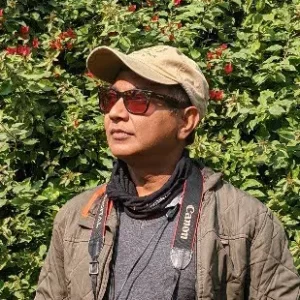
Mr. Vibhav Srivastava is a seasoned wildlife biologist and ecotourism professional with over 20 years of experience across wildlife research, forest management, conservation education, and sustainable tourism in India.
Currently at Nature Safari India, he curates immersive wildlife experiences, leads conservation communication, and designs educational outreach programs. His expertise spans both in-situ and ex-situ conservation, with extensive field work in all major wildlife landscapes of Central, Northern, Eastern, and Southern India. Notable contributions include all-India tiger monitoring with the Wildlife Institute of India, community-based conservation initiatives, and training forest staff and nature guides.
He has held key roles with RARE India, National Zoological Park (New Delhi), Le Passage to India, Tiger Protection Group, and served as Chief Naturalist at Kanha National Park, deepening his expertise in biodiversity conservation and human-wildlife interactions.
An accomplished educator and communicator, Mr. Srivastava has delivered over 30 lectures at prestigious institutions including Delhi University, BHU, Amity University, and IITTM. He is a published author and researcher, with co-authored books, scientific publications, and paper presentations at national seminars. His work consistently bridges conservation science, community engagement, and responsible tourism.
He holds a Master’s degree in Botany, has received professional training from the Wildlife Institute of India, and was nominated among the top five naturalists in India for the TOFT Best Naturalist Award.
