

India, with its immense geographical and climatic diversity, is home to an astonishing array of plant life—from towering Himalayan conifers to lush tropical orchids, desert succulents to ancient medicinal herbs. This rich botanical heritage is not just preserved in the wild, but also carefully curated, studied, and celebrated in the country’s botanical gardens and herbaria—what we might call India’s living libraries.
For botany enthusiasts, researchers, students, and curious travelers, these institutions offer a window into the vast world of plant science and biodiversity. They safeguard rare and endangered species, facilitate vital scientific research, and educate the public about the ecological importance of flora. Each garden and herbarium tell a unique story – of evolution, culture, conservation, and the deep-rooted relationship between people and plants.
In this article, we explore some of the most remarkable botanical gardens, orchidarium, and herbaria across India—places where every leaf has a legacy, and every petal is a page in nature’s own encyclopedia.
So, whether you’re tracing the roots of ancient medicinal plants, admiring the world’s largest banyan tree, or simply walking through a rainforest recreated in a garden, here are some of the most fascinating botanical spaces in India that every plant lover should explore.
Forest Research Institute (FRI), Dehradun – A Botanical Legacy in the Himalayan Foothills

Nestled in the lush Doon Valley and framed by the lower Himalayas, the Forest Research Institute (FRI) in Dehradun stands as a beacon of forestry research and botanical education in India. Its majestic Greco-Roman style architecture is as iconic as its contribution to science. The institute traces its roots back to 1878, when it began as a humble Forest School to train forest officers. It was formally established as the Imperial Forest Research Institute in 1906, making it one of the oldest institutions of its kind in the world.
Later known as the Forest Research Institute and Colleges, it operated multiple centers across India for research and training of Forest Officers and Rangers. With the reorganization of forestry research in the country and the formation of the Indian Council of Forestry Research and Education (ICFRE) in 1988, these centers were given independent status. FRI today functions as a premier institute under the ICFRE and was granted Deemed University status in December 1991 by the Government of India.
.
The Botanical Garden within the FRI campus is a meticulously planned expanse of themed plots, showcasing a rich collection of trees, shrubs, climbers, and medicinal plants. A particular highlight for visitors is the impressive collection of bamboo species—ranging from towering timber bamboos to delicate ornamental varieties—planted to demonstrate their ecological and economic importance. This grove is especially popular with researchers and students studying India’s fast-growing bamboo industry.
One of the most awe-inspiring exhibits in the FRI’s timber museum is the massive cross-section of a tree trunk, placed prominently for visitors to observe. This ancient trunk, likely of a coniferous giant, displays clearly visible growth rings – each one telling the story of a year in the tree’s life. Visitors can literally count the years of growth, offering a tangible understanding of tree age and the science of dendrochronology.
The museum complex within FRI features six museums, including those on Pathology, Silviculture, Non-Wood Forest Products, and Entomology. These are not just for academic interest—many of the exhibits, including models, preserved specimens, and interactive displays, make complex forest science accessible to the public and school groups alike.
For anyone passionate about plants, forests, or the natural world at large, the FRI campus is a place where science and serenity meet. Whether you’re exploring the gardens or diving into the rich botanical archives within its museums, FRI offers an unforgettable journey into India’s forested heritage.
Visiting Hours
- Open: 9:00 AM to 5:30 PM (last entry at 5:00 PM)
- Closed: National Holidays
Entry Fees
- Entry Ticket: ₹50 per person
- Guided Tour of Museums: Included with entry
- Camera/Photography: ₹50 (subject to change)
How to Reach
- Located about 7 km from Dehradun Railway Station and 30 km from Jolly Grant Airport.
- Easily accessible via auto-rickshaws, taxis, and local buses.
Nearby Attractions
- Tapkeshwar Mahadev Temple – A riverside cave temple dedicated to Lord Shiva
- Robber’s Cave (Guchhupani) – A natural limestone cave formation
- Malsi Deer Park – A small zoological park ideal for kids and nature walks
- Mindrolling Monastery – One of India’s largest Buddhist centers, known for its grand stupa and serene gardens
Acharya Jagadish Chandra Bose Indian Botanic Garden, Kolkata – Home to the World’s Largest Tree

image source – Botanical Survey of India
Located in Shibpur, Howrah, just across the Hooghly River from Kolkata, the Acharya Jagadish Chandra Bose Indian Botanic Garden is a living testament to India’s rich botanical heritage. Established in 1787 by Colonel Robert Kyd of the East India Company, the garden spans over 273 acres and is managed by the Botanical Survey of India. Initially conceived to cultivate plants of economic value, such as teak and spices, the garden has evolved into a sanctuary for plant conservation, research, and education.
A Diverse Botanical Collection
The garden boasts an impressive collection of over 12,000 plant species, including rare orchids, bamboos, palms, and various medicinal plants. Its diverse flora attracts botanists, researchers, and nature enthusiasts from around the world.
The Great Banyan Tree: A Natural Wonder
The crown jewel of the garden is undoubtedly the Great Banyan Tree (Ficus benghalensis), renowned for its immense size and age. Estimated to be over 250 years old, this majestic tree covers an area of approximately 4.67 acres (1.89 hectares), making it one of the largest trees in the world by canopy coverage.
Despite losing its main trunk to fungal infection in 1925, the tree continues to thrive through its extensive network of over 3,772 aerial roots, which have developed into secondary trunks. These roots give the appearance of a dense forest, allowing visitors to walk beneath its vast canopy and experience the grandeur of this living monument.
Historical Significance
Beyond its botanical treasures, the garden holds historical importance. It played a pivotal role in the introduction and cultivation of economically significant plants during the colonial era. The efforts of botanists like William Roxburgh, often referred to as the “Father of Indian Botany,” were instrumental in expanding the garden’s collection and establishing it as a center for botanical research.
Visiting Hours
- Open: 10:00 AM to 5:00 PM
- Closed: Mondays and National Holidays
Entry Fees (may vary slightly)
- Indian Citizens: ₹10–20 per person
- Foreign Nationals: ₹100–200 per person
- Camera Charges: Additional fee for photography
- Students/Researchers: May require prior permission for special access
How to Reach
- Located in Shibpur, Howrah, approx. 12 km from central Kolkata.
- Accessible by taxi, local buses, and trains (Shalimar and Howrah stations nearby).
Nearby Attractions
- Howrah Bridge – Architectural marvel connecting Kolkata to Howrah
- Indian Museum, Kolkata – One of the oldest and largest museums in India
- Victoria Memorial – Iconic colonial-era landmark surrounded by lush gardens
- Prinsep Ghat – Riverside promenade ideal for sunset views
Lloyd Botanical Garden, Darjeeling – A Himalayan Haven for Plant Lovers & One of the Most Beautiful Botanical Gardens

image source – Tripadvisor
Established in 1878, the Lloyd Botanical Garden is a verdant oasis spread over 40 acres in the heart of Darjeeling, West Bengal. Named after William Lloyd, who generously donated the land, the garden was conceived as an extension of Kolkata’s Acharya Jagadish Chandra Bose Indian Botanic Garden. Perched at an elevation of approximately 6,000 feet, this botanical sanctuary showcases the rich floral diversity of the Eastern Himalayas and beyond.
Highlights of the Garden
- Native Himalayan Flora: The garden conserves a plethora of indigenous plant species, including various bamboos, oaks, magnolias, arisaemas, cotoneasters, wild geraniums, and rhododendrons.
- Orchidarium: A dedicated section houses around 2,500 orchids, representing approximately 50 varieties. Notably, it features rare and endemic orchids from the Singalila Ridge, offering a visual treat for visitors.
- Cactus and Succulent Conservatory: A collection of about 150 species of cacti and succulents is displayed in the conservatory, showcasing plants adapted to arid environments.
- Living Fossils: The garden is home to two ancient trees, including the Ginkgo biloba, often referred to as a “living fossil” due to its prehistoric origins.
- Rock Garden (Sir John Anderson Garden): This landscaped area features a variety of alpine plants and offers serene spots for relaxation amidst nature.
- Student Section: An educational zone dedicated to showcasing Sikkim Himalayan plantations and medicinal plants, catering to students and researchers.
Visitor Information
- Timings: Open daily from 9:00 AM to 5:00 PM.
- Entry Fee:
- General Admission: ₹20 per person
- Students (with valid ID): ₹5
- Best Time to Visit: Spring (March to May) is ideal, as the garden bursts into a riot of colors with blooming rhododendrons, magnolias, and other native flowers.
Location & Access
Situated just below the Eden Sanatorium (now Shaheed Durga Mall District Hospital), the garden is within walking distance from Darjeeling’s Chowk Bazaar taxi stand. There are four main entrances:
- Gate No. 1 (Lochnagar Gate): Accessible via a steep path from the taxi stand; vehicles can reach this gate, but parking is not available.Wikipedia
- Gate No. 2 (Staff Gate): Approachable on foot through settlements near the Sadar Police Station; leads to staff quarters and a staircase to the gate.
- Gate No. 3 (Chandmari Gate): Reached via Hari Ghose Road through the bazaar; vehicles can access this gate, but parking is limited.
- Gate No. 4 (Victoria Gate): Located on Victoria Road, providing entry from the western side.
Nearby Attractions
- Padmaja Naidu Himalayan Zoological Park: Home to rare Himalayan fauna, including the red panda and snow leopard.
- Himalayan Mountaineering Institute: Offers insights into mountaineering history and training.
- Darjeeling Himalayan Railway: A UNESCO World Heritage site offering scenic toy train rides.
- Observatory Hill and Mahakal Temple: A spiritual site offering panoramic views of the surrounding mountains.
If you are curious about some places you can visit on your weekends in New Delhi, checkout our blog on Tree Walks in Delhi.
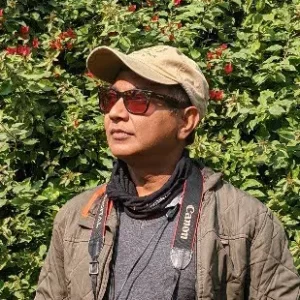
Mr. Vibhav Srivastava is a seasoned wildlife biologist and ecotourism professional with over 20 years of experience across wildlife research, forest management, conservation education, and sustainable tourism in India.
Currently at Nature Safari India, he curates immersive wildlife experiences, leads conservation communication, and designs educational outreach programs. His expertise spans both in-situ and ex-situ conservation, with extensive field work in all major wildlife landscapes of Central, Northern, Eastern, and Southern India. Notable contributions include all-India tiger monitoring with the Wildlife Institute of India, community-based conservation initiatives, and training forest staff and nature guides.
He has held key roles with RARE India, National Zoological Park (New Delhi), Le Passage to India, Tiger Protection Group, and served as Chief Naturalist at Kanha National Park, deepening his expertise in biodiversity conservation and human-wildlife interactions.
An accomplished educator and communicator, Mr. Srivastava has delivered over 30 lectures at prestigious institutions including Delhi University, BHU, Amity University, and IITTM. He is a published author and researcher, with co-authored books, scientific publications, and paper presentations at national seminars. His work consistently bridges conservation science, community engagement, and responsible tourism.
He holds a Master’s degree in Botany, has received professional training from the Wildlife Institute of India, and was nominated among the top five naturalists in India for the TOFT Best Naturalist Award.