Culture, Tigers & World Heritage of North India Tour
- Why choose Culture, Tigers & World Heritage of North India Tour?
Journey Highlights & Overview
This 13-day journey across Northern India is an immersive blend of history, wildlife, and architectural grandeur. From the bustling streets and Mughal-era monuments of Delhi to the tiger-laden forests of Sariska and Ranthambore and the avian paradise of Bharatpur, this itinerary offers an unmatched cultural and natural experience.
Along the way, explore ancient temples, royal palaces, and no fewer than nine UNESCO World Heritage Sites, culminating in a sunrise visit to the iconic Taj Mahal. A perfect combination for lovers of heritage, wildlife, and India’s timeless charm
- UNESCO World Heritage Sites Covered in This Itinerary
- Humayun’s Tomb (Delhi)
- Qutub Minar (Delhi)
- Red Fort Complex (Delhi)
- Ranthambore Fort (Ranthambore)
- Jaipur City (Rajasthan)
- Amer Fort & Hill Forts of Rajasthan (Jaipur)
- Jantar Mantar (Jaipur)
- Keoladeo National Park (Bharatpur)
- Fatehpur Sikri (near Agra)
- Agra Fort (Agra)
- Taj Mahal (Agra)
- Plan this journey
Get a quote for this journey
A senior naturalist reviews every enquiry and responds within 6 hours. You’ll receive a tailored itinerary, not a generic brochure.
- Destinations covered on this tour
Sneak a peak into the trail
At Nature Safari India, we believe your only job should be to immerse yourself in the magic of India on your tour.
From booking internal flights and securing train reservations to arranging private road transfers and handling any unique, special requests along the way, we take care of every logistical detail.
Leave the planning to us so you can simply focus on enjoying your unforgettable journey.
Itinerary for Culture, Tigers & World Heritage of North India Tour
- Day 1
Arrive in New Delhi (By Flight)
Arrive in Delhi and transfer to your heritage accommodation at Culture, Tigers & World Heritage of North India Haveli Dharampura, located in the heart of Old Delhi. In the evening, enjoy a rickshaw ride through the historic lanes of Chandni Chowk, immersing in the vibrant atmosphere of this centuries-old market. The ride is followed by a specially curated food walk, where you sample some of the city’s most iconic and flavourful street delicacies


- Day 2
Delhi Tour
Begin the day with a visit to Jama Masjid, one of the largest and most magnificent mosques in India. Then proceed on a full-day exploration of both Old and New Delhi.
The day includes visits to three UNESCO World Heritage Sites: Humayun’s Tomb, a precursor to the Taj Mahal and an outstanding example of Mughal architecture; Qutub Minar, a soaring 13th-century tower; and the Red Fort Complex, the imposing fortress that once served as the main residence of the Mughal emperors.
Return to your hotel in the evening
- Day 3
Delhi to Sariska
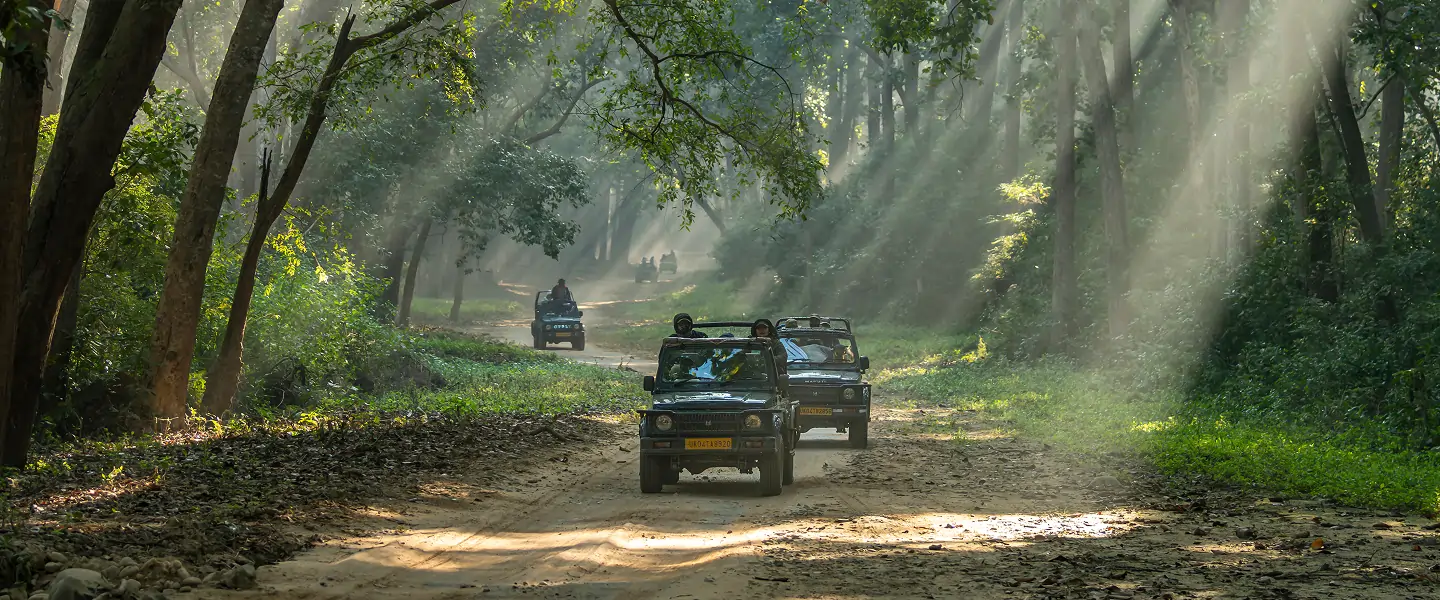
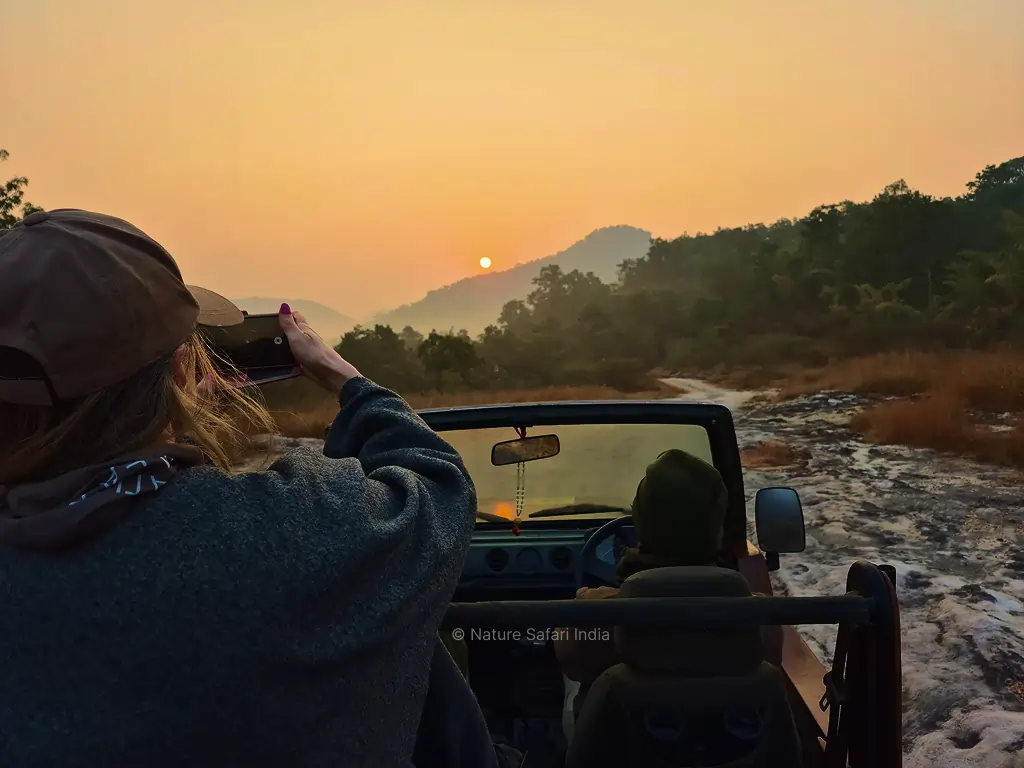
After breakfast, depart for Sariska Tiger Reserve. On arrival, check in at your forest lodge. In the afternoon, embark on a jeep safari inside the reserve. Later, an evening safari takes you through the peripheral forest landscape, where you have better chances of encountering nocturnal species such as foxes, Indian civets, hyenas, and porcupines.
Enjoy dinner and overnight stay at the lodge


- Day 4
In Sariska Tiger Reserve
Start the day with a morning safari in Sariska, exploring more core zones and grasslands for wildlife including leopards, sambar, and various birds of prey. Post lunch, drive to the 6th–9th century Neelkanth Temple complex, which is nestled amidst forested hills and is known for its ancient and intricate stone carvings. Conclude the day with a scenic sundowner experience on the boulder outcrops surrounding the reserve.
All meals and overnight stay in the lodge
- Day 5
Sariska to Jaipur via Abhaneri
Begin the morning with a final safari in Sariska. After breakfast, drive to Jaipur, stopping en route at the spectacular Abhaneri Step Wells. Also known as Chand Baori, this stepwell is among the deepest and most visually stunning in India, with over 3,500 symmetrical steps.
Continue to Jaipur and check in to your hotel. Enjoy a relaxed evening walk near the Jal Mahal (Lake Palace), set in the middle of Man Sagar Lake.
Overnight in Jaipur


- Day 6
Jaipur Sightseeing
Enjoy a full day of sightseeing in the Pink City. The tour includes the City Palace, Jantar Mantar (an astronomical observatory), and Hawa Mahal (Palace of Winds). Visit Amer Fort, a magnificent blend of Hindu and Mughal architecture located on a hilltop. Jaipur City as a whole is a UNESCO World Heritage City, and its key forts, including Amer, are part of the UNESCO Hill Forts of Rajasthan listing.
Lunch will be arranged at a local heritage restaurant.
Return to hotel for overnight stay
- Day 7
Jaipur to Ranthambore
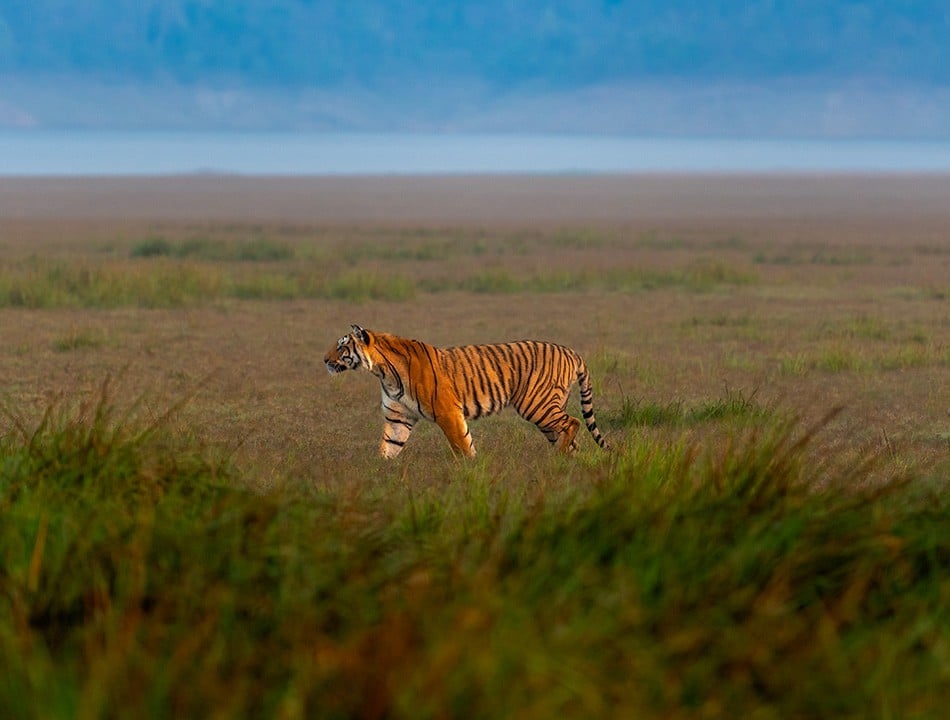
After breakfast, drive to Ranthambore Tiger Reserve. On arrival, check in at the safari lodge and enjoy lunch. In the afternoon, proceed for a jeep safari inside the park. Ranthambore is one of the finest places in India to spot wild tigers in their natural habitat, set against the backdrop of a dramatic 10th-century fort (A UNESCO World Heritage Site).
Overnight and all meals in Ranthambore


- Day 8 & 9
In Ranthambore National Park
Today, enjoy both morning and afternoon safaris inside Ranthambore.
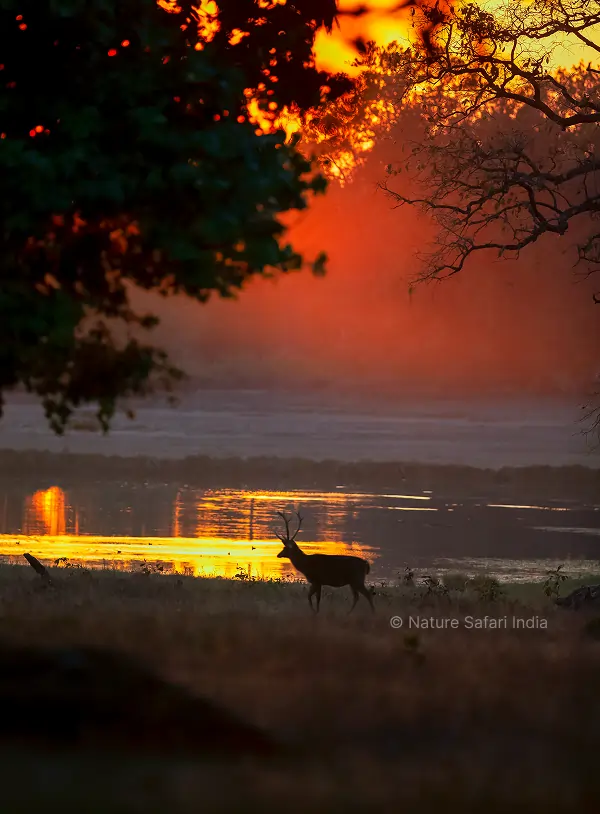
Besides tigers, the park is home to leopards, sloth bears, marsh crocodiles, and an incredible diversity of bird species. The park’s varied landscape of lakes, cliffs, forests, and old ruins creates scenic backdrops for wildlife sightings and photography.
Overnight and all meals in Ranthambore
- Day 10
Ranthambore to Keoladeo
After the morning safari, depart for Keoladeo Ghana National Park (Bharatpur), a UNESCO World Heritage Site and one of the world’s most important bird sanctuaries. On arrival, check in to the hotel and enjoy an evening visit to the park. Spread across wetlands and grasslands, Keoladeo is home to over 450 species of birds, including storks, cranes, ducks, and birds of prey.
Explore the park by cycle rickshaw.
Overnight and Dinner in a resort in Bharatpur

- Day 11
In Keoladeo National Park or Bharatpur
Enjoy a morning birding session at Bharatpur. After breakfast, drive to Agra, stopping en route at Fatehpur Sikri – a perfectly preserved red sandstone Mughal city and UNESCO World Heritage Site. Continue to Agra and visit Agra Fort, a massive UNESCO World Heritage site built primarily from red sandstone. Later, head to Mehtab Bagh for a breathtaking sunset view of the Taj Mahal from across the Yamuna River.
Overnight in Agra
- Day 12
Agra to Delhi
Wake early for a sunrise visit to the Taj Mahal – a UNESCO World Heritage Site and the eternal symbol of love. After breakfast, return to Delhi and check in to your hotel near the airport (Aerocity) for your final night in India

- Day 13
New Delhi Fly Back
- Trip Inclusions
- Accommodation in New Delhi on bed and breakfast basis.
- Accommodation in Kanha and Bandhavgarh on room, all meals and safari basis.
- Your entrance and guide charges in Kanha and Bandhavgarh.
- 6 Exclusive jeep safaris will be provided in Kanha.
- 7 Exclusive jeep safaris will be provided in Bandhavgarh.
- Assistance at airport and hotels
- All land transfers in air-conditioned Toyota innova/Crysta
- All currently applicable taxes
- Trip Exclusions
- International and domestic airfare
- Still / video camera fee in the monuments and national parks.
- Expenses of personal nature like Tips, smokes, liquor, laundry and telephone calls.
- Travel insurance
- Anything not mentioned in the inclusions.
Experience of Excellence in Indian Wildlife Tourism
Celebrated 25 years in Jan 2025, marking decades of happy guests, 13,000+ trees planted, and impactful conservation efforts. We thank our expert Naturalists, trackers, hotel, and transport partners for their dedication. Committed to sustainable tourism, we will continue delivering exceptional wildlife experiences with the highest service standards.

- Journey extension
Your Journey, Your Choise


- The Experience, Through Their Eyes
Our Testimonials
Wen Chyan
SydneyAdi
Three years after our last trip we ventured to India once more to indulge in Wildlife – this time Lions of Gir, tigers of Corbett, Rhino’s etc of Kaziranga.
We saw focus animals on each drive and none of them disappointed. Excellent naturalist guides in all three parks. The lions were fabulous, even saw young cubs, and thanks to a sharp eyed guide, a leopard (our first and only over two trips to India) in first half hour…
LMD
We just returned from a 17 day trip to see the tigers and a two day add on for the Taj Mahal and Agra Fort. It was wonderful. Nature Safari India is a top notch logistics service and that is the key to a great trip of this sort.
Every airports transfer was on time and in clean and cool vehicles. The in-country flights were well-timed; the transfers from one park to the next were done with safe drivers who took great care to keep us informed of the sites…


Why choose Nature Safari India?
- Journeys Curated by Experts
We at Nature Safari India focuses on creating bespoke wildlife safari tours tailored to your needs so that you will enjoy your dream vacation.
- India-wide naturalist depth
Our in-house naturalists are not just guides, they are storytellers of the jungle who will enhance your tiger safari experience in India.
- Seamless private planning
From touchdown to takeoff, your journey will be seamless. No surprises, no chaos, just peace of mind.
- Conservation with credibility
With our motto, “conservation through tourism” we focus on providing back to nature by supporting communities, protects tigers and more.
- Not just a trip, a dream come true
We believe in providing the best experience to our guests because this is not just a trip, but once in a lifetime journey.
- Beyond wildlife, tribal tales
Not just exploring wildlife, but you will get a chance to dive deep into India’s tribal culture, ancient traditions & heartfelt connection with villagers.
- Plan this journey
Customize the Culture, Tigers & World Heritage of North India Tour for your dates
A senior naturalist reviews every enquiry and responds within 6 hours. Unlike automated booking platforms, every itinerary we send is handcrafted around your dates, parks and interests.
- 25+ years of arranging tiger safaris in central India
- Exclusive jeeps and in-house naturalists on every safari
- Guaranteed sighting - India holds 75% of the world's wild tigers - we put you in the right park and zone to see them
- Prefer to talk it through?
Sharad Vats — +91 98112 00094
[email protected]
- What to Expect, Clearly Explained
Frequently Asked Questions
Why should I go to India for Wildlife Safari in 2026?
India boasts unparalleled biodiversity across over 100 national parks, featuring iconic species like Bengal tigers, Asiatic lions, one-horned rhinos, elephants, sloth bears, and Indian leopards. In 2026, enhanced conservation, sustainable initiatives, and improved infrastructure make safaris much more accessible, affordable, and eco-friendly. Blend thrilling jeep tours in Kanha, Corbett, Pench, Ranthambore or Kaziranga with cultural tours for an unforgettable adventure. Choose solo, group, or private options, extendable to special interests like snow leopard expeditions, red panda quests, and birding tours.
Why should I take a tiger Safari India tour but not in other country?
There are 7 other countries besides India where the Tigers roam free. But India with a population of 4000+ tigers has about three-fourth of world’s wild tigers roaming in 50 tiger reserves. The sheer number of tigers in India increases the chances of sighting them substantially. Out of the 50 tiger reserves you have excellent chances of sighting tigers in at least 15 of them.
Which are the top 03 national parks for a tiger safari in India?
The top 3 national parks for tiger safari in India are Corbett National Park, Bandhavgarh National Park and Ranthambore National Park. To read a detailed review of the three, please read our blog on the Top 3 National Parks for Tiger Safaris in India. These we mention keeping in mind the consistency of tiger sightings over last 30 years.
Is an open jeep safe for a tiger safari India tour?
Yes, jeeps are safe for a tiger safari in India. The only point of understanding is that the jeep and its occupants must at all times maintain a safe distance from the wildlife around. If you hinder their space or peace, they might not like it and in turn leave the area. Always remember that you are in their territory and it is only basic courtesy to not disturb them. Do not get off your safari vehicle to click photos, do not feed them, and do not ask the driver/guide/naturalist to speed up to chase wildlife around. These are basic rules and any form of disobedience is strictly punishable.
What kind of clothes should I carry on a tiger safari India tour?
The temperature in Indian jungles experiences fluctuations throughout the day. During the scorching summer months of April and May, it can climb to a peak of 45 degrees Celsius, but it cools down to a pleasant 25 degrees Celsius in the evenings. In the winter season, from December to February, the mornings can be quite chilly, with temperatures dropping to as low as 0-5 degrees Celsius, but the days become comfortably warmer, ranging between 15-20 degrees Celsius. If you’re interested in learning more about tiger safaris in India and how these temperature changes can impact your experience, click here to read further.
For detailed blog post on the best time to visit national parks in India for tiger safaris.
What is the difference between a jeep and a canter on a tiger safari India tour?
A jeep is an open roofed car which is the most agile form of tiger safari within an Indian national park. It has the capacity to seat a naturalist (also your driver), a guide (as provided by the forest department) and 06 guests while on safari. A canter on the other hand is an open roofed mini bus which has the seating capacity of a driver, guide and 16-20 guests.
Which all documents are required by an NRI for experiencing tiger safari in India?
You will need 2 documents to have an experience of tiger safari in India and those are your passport and safari permits. Permits can be booked online through goverment websites. While booking your tiger safari permits, NRI’s must have their passports ready as you need to update the same on the website and don’t forget to carry your passport while going for the safari as the park officials check the same at the entry gates.
Its optional but important to carry a local identity proof like drivers licence with you as sometimes it is required to cross check your passport.
What is the average cost of a tiger safari tour in India?
The cost of a Tiger Safari in India varies significantly based on several factors, including the national parks you visit, the duration of your trip, the size of your travel group, your choice of accommodation (whether it’s 3-star or 4-5 star), and whether you opt for exclusive or shared jeep safaris, among other considerations.
How do I book a tiger safari in India?
You can book a tiger safari in India through a reputed wildlife travel company that arranges park permits, expert guides, and accommodations. Here is a quick comparison between the top 5 best tiger safari tour operators in India. Advance booking is highly recommended, especially for popular parks like Bandhavgarh, Corbett, Kanha, Pench & Ranthambhore.
Which company offers the best tiger safari in India?
The best tiger safari in India is often curated by companies with decades of wildlife expertise, in-depth park knowledge, and a network of naturalists. Look for companies offering tailor-made itineraries and consistently high guest ratings. At Nature Safari India we hold 30 years of experience organizing experiential tiger safari tours in the best national parks of India. read our testimonials or TripAdvisor page to know how our guests rate our services.
What is included when I book a tiger safari in India?
When you book a tiger safari in India, the package often includes park entry permits, jeep safaris, guide fees, accommodation, and meals. Some premium operators like Nature Safar India & Tiger Safari India also offer transfers, expert naturalists, and personalized services.
What makes the best tiger safari in India truly special?
The best tiger safari in India combines high tiger density parks, expert trackers, quality accommodations, and well-timed safaris. Personalised attention, responsible tourism, and seamless logistics set top experiences apart from generic ones.
With Nature Safari India, you get a special curated tour for your needs and schedule because we believe that your journey should be designed to cater your needs.
How many safaris should I plan to maximize my chances of seeing the tigers?
No one can predict a confirmed tiger sighting, but with the right combinations of naturalists, Jeep drivers, and park guides, the chances are better. To answer the question of how many safaris you should do to maximize tiger sightings, I can say a minimum of four tiger safaris is required at a national park. It will maximize your chances by giving you more time to explore more areas.
Are children allowed on tiger safaris, and if allowed how old should they be?
The safari hours are long, children of younger age get bored and may create noise, which is not good for safety as well as safari experience for the fellow safari goers, so only children above the age of five are allowed to go on a tiger safari.
Can we get a refund if we cancel a tiger safari in advance?
It depends on how many days before you cancel your safari. If you cancel it one month before, you will get a full refund except for the booking charges.
How fit do I have to be for a tiger safari?
A tiger safari is always conducted in a 4X4 vehicle, and there is no walking involved. If you are a person who can sit comfortably in an open vehicle for long hours, then you are perfect for the tiger safari.
However some national parks gives the experience of walking safaris for which you have to cover 4 – 5 miles (approx.)
Can I stay inside a national park during my tiger safari in India?
Yes, several national parks offer forest rest house and premium stays inside or near the core zones. Staying close enhances your chances of early morning and evening sightings during your tiger safari in India. Examples Corbett, Namdapha National Parks.