Tiger of Terai & Temple Tour
- Why choose Tiger of Terai & Temple Tour?
Journey Highlights & Overview
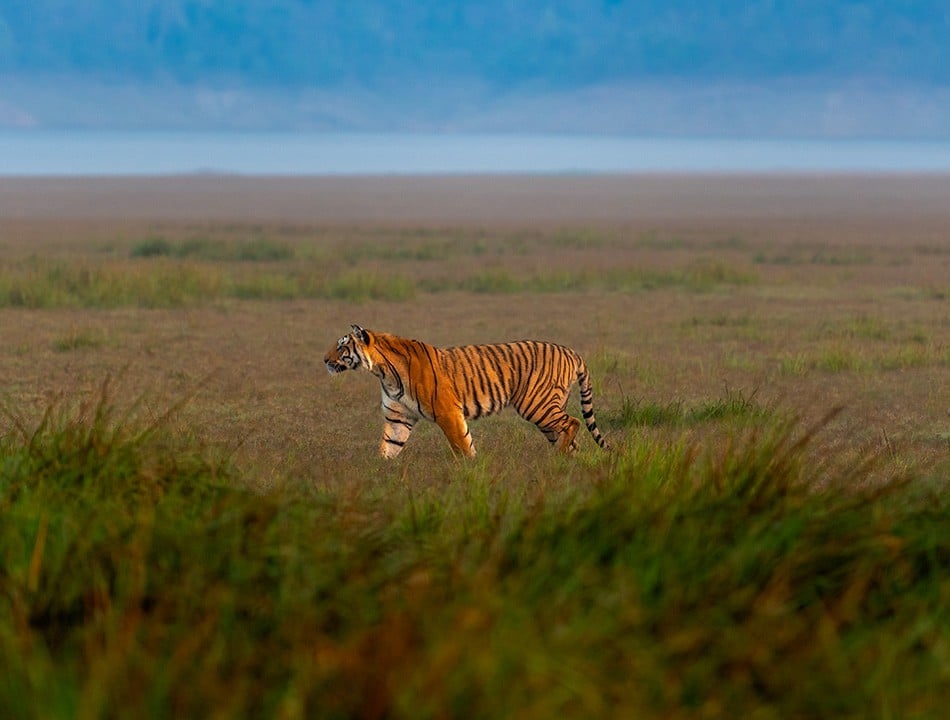
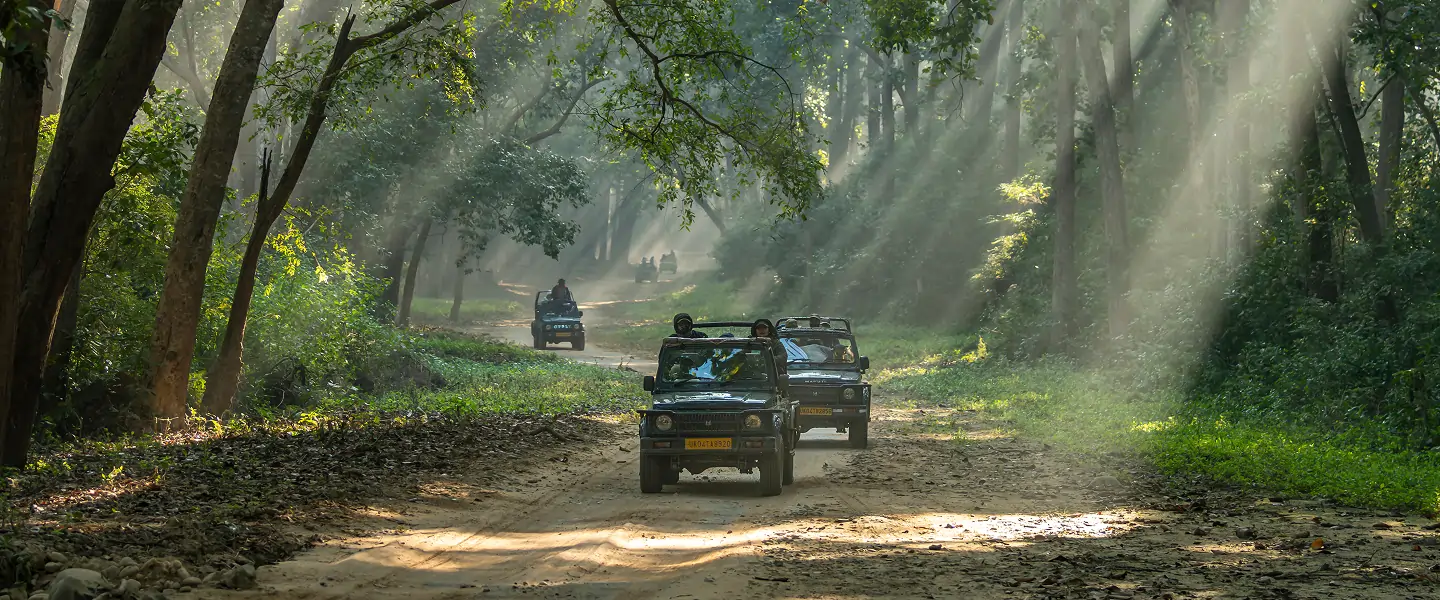
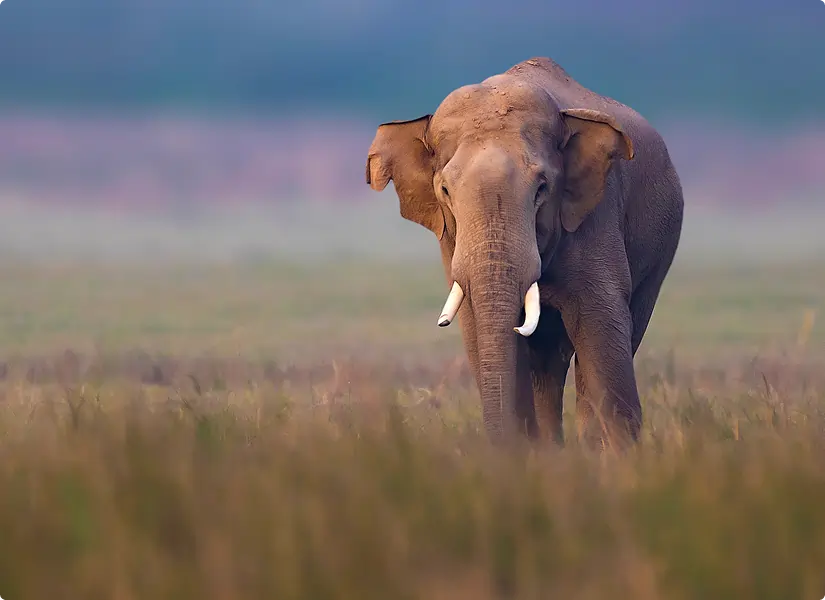
An exploration across North India unfolds as a remarkable passage through untamed wilderness, royal legacy, and sacred tradition. In Jim Corbett National Park, framed by the Himalayan foothills, shimmering rivers, open grasslands, and dense sal forests set the stage for encounters with the majestic Bengal tiger, roaming Asian elephant herds, and a vibrant diversity of birdlife. Each drive carries the excitement of classic tiger country blended with spectacular mountain scenery.
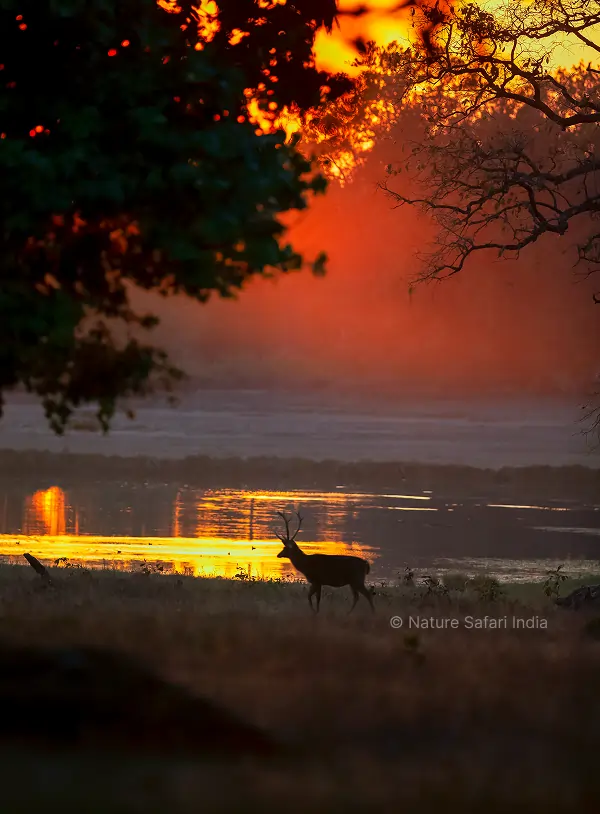
The journey continues into the Terai heartland of Dudhwa National Park, a remote and enchanting mosaic of wetlands and tall grasslands. Here, conservation success stories thrive, from the imposing greater one-horned rhinoceros to the graceful swamp deer. The park’s quiet, less-travelled character lends a rare sense of exclusivity, where wildlife sightings feel intimate and profoundly authentic.
From forested frontiers, the narrative shifts to refined culture in Lucknow, a city celebrated for its Nawabi elegance, grand architecture, and legendary hospitality. Mughal-era monuments, bustling bazaars, and an enduring culinary heritage reveal a sophisticated layer of India where history and daily life remain beautifully intertwined.
The odyssey culminates on the timeless ghats of Varanasi, one of the world’s oldest living cities. Dawn boat rides along the Ganges, ancient temples, and hypnotic evening ceremonies create moments of deep spiritual resonance. It is here that travellers witness India at its most profound—where faith, ritual, and eternity flow together beside the sacred river.
Together, these destinations weave a rich tapestry of wildlife, heritage, and living spirituality, delivering a journey that is as diverse as it is unforgettable.
- Plan this journey
Get a quote for this journey
A senior naturalist reviews every enquiry and responds within 6 hours. You’ll receive a tailored itinerary, not a generic brochure.
- Destinations covered on this tour
Sneak a peak into the trail
At Nature Safari India, we believe your only job should be to immerse yourself in the magic of India on your tour.
From booking internal flights and securing train reservations to arranging private road transfers and handling any unique, special requests along the way, we take care of every logistical detail.
Leave the planning to us so you can simply focus on enjoying your unforgettable journey.
Itinerary for Tigers of Terai & Rhino Tour
- Day 1
Arrive in New Delhi (By Flight)
On arrival at the Airport a team member from Nature Safari India will be waiting for you outside the arrival lounge. He will escort you to the hotel, your provide with all the travel related documents. Check-in to the hotel. Leisure time at the hotel. Overnight at the hotel in New Delhi.


- Day 2
New Delhi – Corbett (Dikhala)
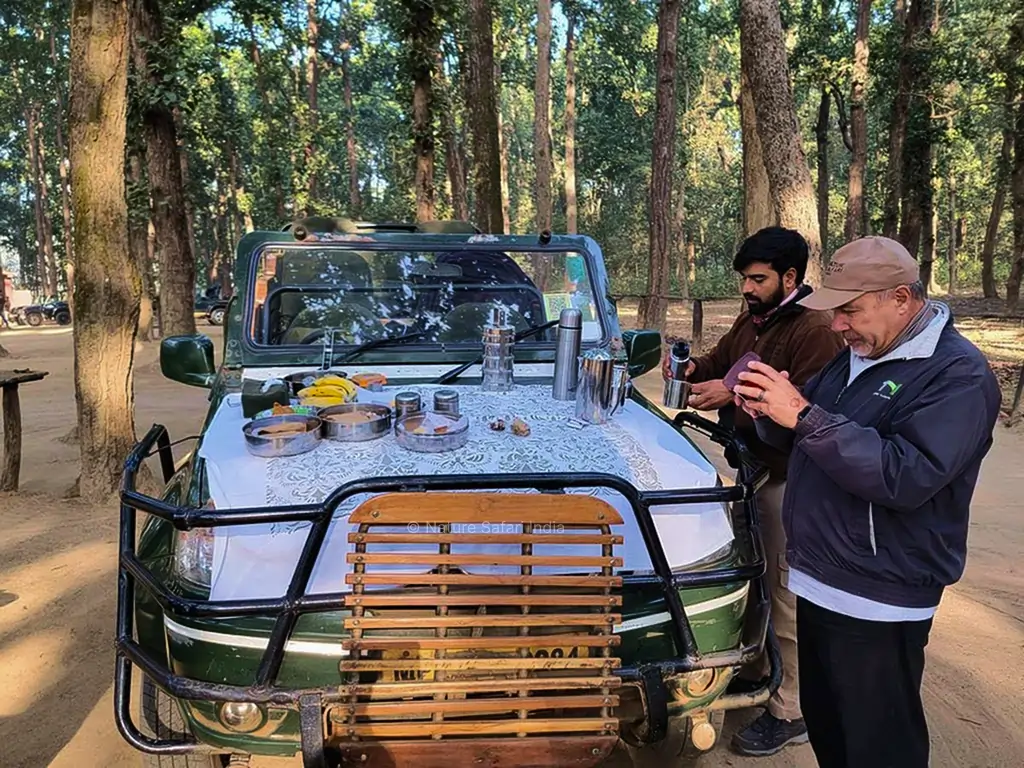
After relaxed breakfast drive to Dhikala. Arrive at the park gate and change into the safari vehicle with your baggage The next 32 kms is a drive through the Corbett National Park to the Forest Rest house which takes approximately 2 hours.
Be ready with your camera equipment to shoot, as a lot of wild and birdlife can be seen on this trail. On arrival, Check into the Forest Rest House. These Rest Houses are unique to Corbett National Park. It is only here that you get an opportunity to stay inside the national park. The complex is located on the banks of Ramganga river and overlooks the foothills of the pristine Himalayas.
Post lunch proceed for an afternoon safari in the most scenic national park of India. Only vegetarian food is served here. Smoking and alcohol are not permitted within the National Park. Return from the safari at sunset. Dinner and overnight at the Forest Rest House.
- Day 3 & 4
In Corbett National Park
Morning and afternoon jeep safaris, meals and overnight at Forest Rest House inside the national park.
Begin your morning safari at sunrise. Corbett has aptly been described as the land of the Roar, Trumpet and Song. It represents a scene of remarkable beauty. Corbett had the proud distinction of being the chosen venue for the inauguration of Project Tiger in India.
The rich biodiversity of the Reserve is partly attributed to the variety of habitat found here. Due to the location of the Reserve in the foothills of the central Himalayas, both Himalayan and peninsular flora and fauna is found in the Reserve.

- Day 5
Corbett [Dhikala – Dhela]
- Day 6
Corbett National Park (JJR)
Morning and afternoon jeep safari to nearby of Dhela or Jhirna.
Jhirna Zone: Located in the southern part of Corbett, Jhirna is open to visitors throughout the year, making it a unique option for off-season safaris. The terrain here is slightly different—more open and dominated by dry deciduous forest and shrubs, offering clearer visibility and better chances of spotting animals.
Jhirna is a hotspot for sloth bears, and sightings are fairly common during the summer and monsoon months. The zone is also known for leopards, elephants, and the elusive tiger. Numerous bird species can be observed in Jhirna, especially in the winter months, making it a birder’s delight. Herbivores like nilgai, sambar, and chital are abundant, and one can often witness predator-prey dynamics playing out in real-time.


- Day 7
Corbett – Kishanpur (Dudhwa National Park)
- Day 8 & 9
In Kishanpur
Morning and afternoon jeep safari in Pilibhit Tiger reserve. All melas at the lodge.
A safari in Pilibhit Tiger Reserve offers a raw, immersive, and wonderfully uncrowded wildlife experience in the terai landscape of northern India. Located along the India–Nepal border in Uttar Pradesh, Pilibhit is characterized by dense sal forests, tall grasslands, riverine belts, and wetlands, creating an ideal habitat for tigers and a rich diversity of wildlife.
Unlike more commercial parks, safaris in Pilibhit feel quiet and exploratory, allowing guests to truly connect with nature. The reserve is known for its healthy tiger population, and sightings are often rewarding due to minimal tourist pressure and expansive territories. Leopards are also present, along with swamp deer (barasingha), spotted deer, hog deer, barking deer, wild boar, and occasionally sloth bears. Pilibhit is especially notable for its birdlife, with over 450 recorded species. During a safari, one can expect to see raptors, woodpeckers, storks, kingfishers, hornbills, and a wide range of migratory birds in winter, making it a paradise for birdwatchers as well as photographers. Dinner and overnight stay at lodge near Kishanpur Sanctuary.


- Day 10 & 11
In Dudhwa National Park
Morning and afternoon jeep safari to the Dudhwa national park. Meals and overnight at Jaagir Manor.
(Your luggage will be transferred from Tiger Lili to Jaagir Manor while you will be doing morning safari)
If you want to relive the prehistoric era, then Dudhwa National Park is the National Park for you. Surrounded by Sal trees and Tall Grassland provides perfect back drop for most vulnerable species to thrive and co-exist. Sal accompanies with Shisham and Jamun ornate Dudhwa National Park. The wildlife thrives in Lakhimpur and Kheri District of Uttar Pradesh. The Lifeline of this forest is river Mohana Khola which criss-crosses in Nepal and India. Nature does not understand human borders and provides shelter to its wildlife beings without any boundaries. Little less known fact is the presence of River Dolphins post monsoon season.
Dudhwa is also emerging as alternative to celebrity parks of Ranthambhore, Kanha and Bandhavgarh to name a few. One thing we would like to mention here is that above parks are on the world map for tiger sighting as they frequency of tigers showing up is far greater in those parks.
It is also known as Billy Arjan Singh Country. Indian hunter turned Conservationist and author. It is amazing to find the two National parks huddled together in Terai are after two famous wildlife personalities – Billy Arjan Singh and Jim Corbett. Both of them gave radical thinking for wildlife conservation.
- Day 12
Dudhwa – Lucknow


- Day 13
In Lucknow
- Day 14
Lucknow – Varanasi
Post breakfast, depart for Varanasi by road. On arrival check in at the hotel. Varanasi is one of India’s most important pilgrimage sites and the holiest of holy cities for Hindus. Known also as Kashi and Benaras, Varanasi is one of the world’s oldest living cities, and has been a centre of learning and culture for well over 2000 years.
Evening: Visit the “Ghats” or bank of the Ganga River. This is a fascinating walk as you can experience the cultural ethos that guides the life of the pious. See the rituals that take place to the setting sun and the ablutions that are performed in the river. As boats float down-stream, some carrying goods, fruits and vegetables, you will see others carrying the pious who perform ceremonies along the river.
On the banks or “ghats”, you can see some absorbed in prayer and the chanting of hymns, and others engaged in commerce and yet others performing functions like hair-cutting, massaging and even cleaning ears! Walk across to the Manikarnika Ghat, where you can see cremation, performed with intense ritual – the process of sending the departed soul to the heavens. Hindus believe that the gateway to the Heavens and for the Re-incarnation of the Soul `in a better state’, is possible when life’s last journey is from Varanasi. Overnight stay at the hotel in Varanasi.


- Day 15, 16 & 17
In Varanasi
Early morning: Take a boat ride at dawn down India’s most sacred river, The Ganges. Sun rise at the holy river is a truly tranquil and breath-taking sight with pilgrims standing waist-deep in water, praying to the rising Sun. See the famous Vishwanath temple with its spires covered with gold, dedicated to Shiva, the presiding deity of the city. Return to the hotel for Breakfast
Also visit Sarnath a city located 13 kilometres north-east of Varanasi near the confluence of the Ganges and the Gomati rivers in Uttar Pradesh, India. The deer park in Sarnath is where Gautama Buddha first taught the Dharma, and where the Buddhist Sangha came into existence through the enlightenment of Kondanna. Singhpur, a village approximately one km away from the site, was the birthplace of Shreyansanath, the eleventh Tirthankara of Jainism, and a temple dedicated to him.
Full day at your exploration. Overnight at Varanasi hotel.
- Day 18
New Delhi Fly Back
Morning at your leisure to unwind and pack. Later transfer to airport to board a flight to New Delhi 1250. Arrive at 1425, on arrival, our representative will be waiting for you at the Airport to transfer you in Toyota Innova/Crysta, to your hotel. He will further assist to the New Delhi International Airport to board your flight back home.
- Trip Inclusions
- Accommodation in Lucknow & Varanasi on bed and breakfast basis
- Accommodation in Corbett & Dudhwa on room, all meals and exclusive jeep safari basis
- Your entrance fee and Naturalist charges in Corbett & Dudhwa
- 6 Exclusive jeep safaris in Corbett
- 6 Exclusive jeep safaris in Corbett (outside)
- 2 Exclusive jeep safaris in Kishanpur WS
- 2 Exclusive jeep safaris in Pilibhit TR
- 2 Exclusive jeep safaris in Dudhwa NP
- 01 Full Day to visit (jeep and boat safari) to Katarniaghat Sanctuary (Dudhwa)
- Monument entrance charges Lucknow & Varanasi
- Guide charges in Lucknow & Varanasi sightseeing on exclusive basis
- Assistance at airport and hotels
- All land transfers in air-conditioned Toyota innova/Crysta
- All currently applicable taxes
- Trip Exclusions
- International and domestic airfare
- Still / video camera fee in the monuments and national parks.
- Expenses of personal nature like Tips, smokes, liquor, laundry and telephone calls.
- Travel insurance
- Anything not mentioned in the inclusions.
Experience of Excellence in Indian Wildlife Tourism
Celebrated 25 years in Jan 2025, marking decades of happy guests, 13,000+ trees planted, and impactful conservation efforts. We thank our expert Naturalists, trackers, hotel, and transport partners for their dedication. Committed to sustainable tourism, we will continue delivering exceptional wildlife experiences with the highest service standards.

- Journey extension
Your Journey, Your Choise


- The Experience, Through Their Eyes
Our Testimonials
yvonne wiesenthal
Navigate34004106819
Our trip to India was amazing, truly unforgettable. Nature Safari India took care of everything, and Ishana made the whole process smooth and stress-free.
We loved the mix of city life, culture, and wildlife: Mumbai with its stunning views, safaris in Pench, Kanha, and Bandhavgarh (saw incredible wildlife), and the Golden Triangle with Delhi, Agra, and Jaipur…
Victoria Stephens
Fantastic experience with Nature Safari. Sharad Vat was extremely helpful in discussing the different parks with us and advising the one which best fitted the experience we were looking for -non commercial and a private tour as a family of four with two kids aged 10. From the moment we booked, we had a seamless experience. We were met by our driver for the 3 hour drive to the lodge…


Why choose Nature Safari India?
- Journeys Curated by Experts
We at Nature Safari India focuses on creating bespoke wildlife safari tours tailored to your needs so that you will enjoy your dream vacation.
- India-wide naturalist depth
Our in-house naturalists are not just guides, they are storytellers of the jungle who will enhance your tiger safari experience in India.
- Seamless private planning
From touchdown to takeoff, your journey will be seamless. No surprises, no chaos, just peace of mind.
- Conservation with credibility
With our motto, “conservation through tourism” we focus on providing back to nature by supporting communities, protects tigers and more.
- Not just a trip, a dream come true
We believe in providing the best experience to our guests because this is not just a trip, but once in a lifetime journey.
- Beyond wildlife, tribal tales
Not just exploring wildlife, but you will get a chance to dive deep into India’s tribal culture, ancient traditions & heartfelt connection with villagers.
- Plan this journey
Customize the Tiger of Terai & Temple Tour for your dates
A senior naturalist reviews every enquiry and responds within 6 hours. Unlike automated booking platforms, every itinerary we send is handcrafted around your dates, parks and interests.
- 25+ years of arranging tiger safaris in central India
- Exclusive jeeps and in-house naturalists on every safari
- Guaranteed sighting - India holds 75% of the world's wild tigers - we put you in the right park and zone to see them
- Prefer to talk it through?
Sharad Vats — +91 98112 00094
[email protected]
- What to Expect, Clearly Explained
Frequently Asked Questions
Why should I go to India for Wildlife Safari in 2026?
India boasts unparalleled biodiversity across over 100 national parks, featuring iconic species like Bengal tigers, Asiatic lions, one-horned rhinos, elephants, sloth bears, and Indian leopards. In 2026, enhanced conservation, sustainable initiatives, and improved infrastructure make safaris much more accessible, affordable, and eco-friendly. Blend thrilling jeep tours in Kanha, Corbett, Pench, Ranthambore or Kaziranga with cultural tours for an unforgettable adventure. Choose solo, group, or private options, extendable to special interests like snow leopard expeditions, red panda quests, and birding tours.
Why should I take a tiger Safari India tour but not in other country?
There are 7 other countries besides India where the Tigers roam free. But India with a population of 4000+ tigers has about three-fourth of world’s wild tigers roaming in 50 tiger reserves. The sheer number of tigers in India increases the chances of sighting them substantially. Out of the 50 tiger reserves you have excellent chances of sighting tigers in at least 15 of them.
Which are the top 03 national parks for a tiger safari in India?
The top 3 national parks for tiger safari in India are Corbett National Park, Bandhavgarh National Park and Ranthambore National Park. To read a detailed review of the three, please read our blog on the Top 3 National Parks for Tiger Safaris in India. These we mention keeping in mind the consistency of tiger sightings over last 30 years.
Is an open jeep safe for a tiger safari India tour?
Yes, jeeps are safe for a tiger safari in India. The only point of understanding is that the jeep and its occupants must at all times maintain a safe distance from the wildlife around. If you hinder their space or peace, they might not like it and in turn leave the area. Always remember that you are in their territory and it is only basic courtesy to not disturb them. Do not get off your safari vehicle to click photos, do not feed them, and do not ask the driver/guide/naturalist to speed up to chase wildlife around. These are basic rules and any form of disobedience is strictly punishable.
What kind of clothes should I carry on a tiger safari India tour?
The temperature in Indian jungles experiences fluctuations throughout the day. During the scorching summer months of April and May, it can climb to a peak of 45 degrees Celsius, but it cools down to a pleasant 25 degrees Celsius in the evenings. In the winter season, from December to February, the mornings can be quite chilly, with temperatures dropping to as low as 0-5 degrees Celsius, but the days become comfortably warmer, ranging between 15-20 degrees Celsius. If you’re interested in learning more about tiger safaris in India and how these temperature changes can impact your experience, click here to read further.
For detailed blog post on the best time to visit national parks in India for tiger safaris.
What is the difference between a jeep and a canter on a tiger safari India tour?
A jeep is an open roofed car which is the most agile form of tiger safari within an Indian national park. It has the capacity to seat a naturalist (also your driver), a guide (as provided by the forest department) and 06 guests while on safari. A canter on the other hand is an open roofed mini bus which has the seating capacity of a driver, guide and 16-20 guests.
Which all documents are required by an NRI for experiencing tiger safari in India?
You will need 2 documents to have an experience of tiger safari in India and those are your passport and safari permits. Permits can be booked online through goverment websites. While booking your tiger safari permits, NRI’s must have their passports ready as you need to update the same on the website and don’t forget to carry your passport while going for the safari as the park officials check the same at the entry gates.
Its optional but important to carry a local identity proof like drivers licence with you as sometimes it is required to cross check your passport.
What is the average cost of a tiger safari tour in India?
The cost of a Tiger Safari in India varies significantly based on several factors, including the national parks you visit, the duration of your trip, the size of your travel group, your choice of accommodation (whether it’s 3-star or 4-5 star), and whether you opt for exclusive or shared jeep safaris, among other considerations.
How do I book a tiger safari in India?
You can book a tiger safari in India through a reputed wildlife travel company that arranges park permits, expert guides, and accommodations. Here is a quick comparison between the top 5 best tiger safari tour operators in India. Advance booking is highly recommended, especially for popular parks like Bandhavgarh, Corbett, Kanha, Pench & Ranthambhore.
Which company offers the best tiger safari in India?
The best tiger safari in India is often curated by companies with decades of wildlife expertise, in-depth park knowledge, and a network of naturalists. Look for companies offering tailor-made itineraries and consistently high guest ratings. At Nature Safari India we hold 30 years of experience organizing experiential tiger safari tours in the best national parks of India. read our testimonials or TripAdvisor page to know how our guests rate our services.
What is included when I book a tiger safari in India?
When you book a tiger safari in India, the package often includes park entry permits, jeep safaris, guide fees, accommodation, and meals. Some premium operators like Nature Safar India & Tiger Safari India also offer transfers, expert naturalists, and personalized services.
What makes the best tiger safari in India truly special?
The best tiger safari in India combines high tiger density parks, expert trackers, quality accommodations, and well-timed safaris. Personalised attention, responsible tourism, and seamless logistics set top experiences apart from generic ones.
With Nature Safari India, you get a special curated tour for your needs and schedule because we believe that your journey should be designed to cater your needs.
How many safaris should I plan to maximize my chances of seeing the tigers?
No one can predict a confirmed tiger sighting, but with the right combinations of naturalists, Jeep drivers, and park guides, the chances are better. To answer the question of how many safaris you should do to maximize tiger sightings, I can say a minimum of four tiger safaris is required at a national park. It will maximize your chances by giving you more time to explore more areas.
Are children allowed on tiger safaris, and if allowed how old should they be?
The safari hours are long, children of younger age get bored and may create noise, which is not good for safety as well as safari experience for the fellow safari goers, so only children above the age of five are allowed to go on a tiger safari.
Can we get a refund if we cancel a tiger safari in advance?
It depends on how many days before you cancel your safari. If you cancel it one month before, you will get a full refund except for the booking charges.
How fit do I have to be for a tiger safari?
A tiger safari is always conducted in a 4X4 vehicle, and there is no walking involved. If you are a person who can sit comfortably in an open vehicle for long hours, then you are perfect for the tiger safari.
However some national parks gives the experience of walking safaris for which you have to cover 4 – 5 miles (approx.)
Can I stay inside a national park during my tiger safari in India?
Yes, several national parks offer forest rest house and premium stays inside or near the core zones. Staying close enhances your chances of early morning and evening sightings during your tiger safari in India. Examples Corbett, Namdapha National Parks.