Birding In Western Ghats
- Why choose Birding In Western Ghats?
Journey Highlights & Overview
Etched along the western coast of the Indian Subcontinent, The Western Ghats is one of the most breathtaking landscapes in the world. It’s a land gifted with undulating tropical forests, rolling tea estates and stunning shola forests. It is this diversity in the landscape and the ecology of the rainforest that has given rise to enthralling endemics that are on everyone’s wish list.
The Birding in Western Ghats tour is curated as a celebration to many of these remarkable beings: From The Malabar Whistling Thrush, the White-bellied Minivet, Nilgiri Laughingthrush, Nilgiri Wood Pigeon, the Sri Lanka Frogmouth to the exquisite Malabar Trogon, the Indian Pitta and the Great Hornbill. The Birding in Western Ghats Tour can also be combined with a tiger safari tour in Ranthambore, tiger safari In Kanha, Bandhavgarh or even a tiger safari tour in Corbett in the north.
- Diverse avian species amidst lush, biodiverse Western Ghats landscapes.
- Rare endemics thrive in misty montane forests.
- Guided tours offer insight into unique bird behaviors.
- Spectacular sightings of vibrant Malabar Trogon and Nilgiri Flycatcher.
- Conservation efforts protect fragile habitats crucial for birdlife.
- Rich cultural immersion with local communities enhances birding experience.
- Plan your journey with us
Get a quote for your dream wildlife journey in India
A senior naturalist reviews every enquiry and responds within 6 hours. You’ll receive a tailored itinerary, not a generic brochure.

170 reviews

53 reviews

78 reviews
- Destinations covered on this tour
Sneak a peak into the trail
At Nature Safari India, we believe your only job should be to immerse yourself in the magic of India on your tour.
From booking internal flights and securing train reservations to arranging private road transfers and handling any unique, special requests along the way, we take care of every logistical detail.
Leave the planning to us so you can simply focus on enjoying your unforgettable journey.
Itinerary for Birding In Western Ghats
- Day 1
Arrive in New Delhi (By Flight)


- Day 2
New Delhi – Bengaluru – Mysore
After breakfast, transfer to the airport to board a flight to Bengaluru. On arrival, meet our representative at the airport and depart for Mysore. On arrival, settle at your hotel. Post lunch, leave for Ranganathittu Bird Sanctuary (40 mins drive) for an evening birding session on the Cauvery river via boat.
Ranganathittu is an exciting and unique destination where we have a great chance to witness a plethora of waterfowl species such as Pelicans, Painted storks, Black-headed Ibis, Thick Knees, and others. The boat ride one takes is through rocky outcrops, tree-covered banks, and teeming mudflats. The bird diversity here is quite special and possibly one of a kind, when it comes to the tour. After a two-hour boat ride, we return to Mysore for the night.
- Day 3
Mysore – Masinagudi
In the morning, we enage in a birding trail along the Chamundi Canal followed by breakfast. This is a short walk that follows the irrigation canal at the edge of Mysore town (20 mins drive from Hotel). Here, we seek the elusive Indian Eagle Owl and Brown Fish Owl that roost along the canal walls. Apart from them one has the chance to observe Baya Weavers, Small Minivets, White-Rumped Munias, Swallows, Martins and a variety of other scrub habitat species. If you’re lucky, you may come across tracks and signs of the urban leopards that roam the periphery of Mysore.
After breakfast, depart for Masinagudi, located at the periphery of Mudumalai Tiger Reserve. This is a small forested area on the Sigur plateau, located at an altitude of 1000 m. The habitat, situated in the Nilgiri foothills, is a mix of montane forests, tall bamboo patches and dry scrubland. The drive to this destination is close to 2 hrs and cuts through the forests of Bandipur Tiger Reserve. There will be pelnty stops for birding along the drive . We will reach the lodge at Masinagudi by lunchtime.
Once settled, we can head out for a walk around the area in search of the Nilgiri foothill specials like the spot-bellied eagle owls, grey-headed bulbuls, yellow-browed bulbuls, owlets , scops owls, blue-bearded bee eaters, red spurfowl, nightjars and many other interesting species that dot this enchanting landscape.
Dinner and overnight stay at Masinagudi.


- Day 4
Masinagudi – Kotagiri
In the morning, we will head into the scrub forests around the Moyar gorge area, seeking habitat specialties like the blue-faced and sirkheer malkohas and our primary focus, the white bellied minivets. This habitat is also provides ample opportunities to spot bay-backed shrikes and some dry land Aquila raptors.
We return for breakfast at the lodge and check out soon after. From here we drive up hill with a packed lunch into the heart of the Nilgiris, birding at some key spots along the way. ( 2 hrs plus birding and lunch time).
The Botanical Gardens at Ooty and Sims park at Coonoor are key birding hotspots that we will stop at as we search for the super rare Kashmir flycatcher, Nilgiri flycatcher, black and orange flycatcher, crested goshawk and the Nilgiri wood pigeon.
In the afternoon, we reach our lodge in Kotagiri for some well deserved rest.
Kotagiri is a small tea town located amongst large tea plantations and remnant shola and degraded forest areas. The altitude here is roughly 1600 m above sea level and the bird diversity in this area is quite fascinating. The area also boasts a good population of Indian gaur, leopards and sloth bears, all of who thrive amidst the tea undergrowth.
Rest of day at leisure. Night at Kotagiri.
- Day 5 & 6
In Kotagiri
A full day of birding around Kotagiri region. We visit a small shola patch at dawn seeking Nilgiri endemics such as the Nilgiri Sholakili, Nilgiri Chilleppen and the Nilgiri thrush. Chances of coming across vagrants like the Blue and White flycatcher and Pied Thrush are also a possibility on this trail.
We return from the shola patch for breakfast and then head back out again, this time to a tea estate along the fringe area. The hedgerow and meadow habitat of this area is one of the best places to look for red avadavats and the vociferous Malabar lark. There is also a small population of Indian Eagle Owls that reside here.
We return to the lodge for some rest and refreshments. Post lunch, we head out to the lower Kotagiri area to look for soaring raptors and the magnificent Great Hornbills, though the Black Eagles are our top priority for the day. There is also a small grove in the area frequented by Crested Tree swifts, Vernal Hanging Parrots and also, occasionally, the large hawk cuckoo.
Evening we return to the lodge at sundown. Night at Kotagiri.


- Day 7
Kotagiri – Pollachi
After another short morning birding session(optional), we shall check out from the lodge and drive towards the plains and further south towards the agricultural town of Pollachi. ( 3 hrs) Pollachi is located at the heart of the Palghat gap in the Western Ghats with the Nilgiris to its north and the Anamalais range to the south.
This will be our base for the next two days.
On arrival, we proceed for lunch and settle in. In the evening, our excursions take us to the foothills of the Anamalais as we extend the walk into a drive at night in search of forest and grassland species. This may include a wide variety of birds from Orange minivets, Malabar Trogon, munias to the Brown Fish and Mottled Wood Owls. This short stretch of walking and driving, has proved to be very productive for birding in the past.
Overnight stay at Pollachi.
- Day 8
In Pollachi
Post Breakfast, we shall be out for the day at the tea town of Valparai. Nestled inside Anamalai Tiger Reserve, Valparai and its surrounding forests are one of the last strongholds of the endemic lion-tailed macaque. The tall forests also support a variety of species like Nilgiri Martens, Dholes, Flying Squirrels and the endemic Brown Mongoose along with the Jerdon’s palm civet.
In terms of birding, the valparai area is particularly interesting for those seeking the Wayanad Laughingthrush, Hill swallow, Legge’s Hawk-eagle, Rufous-Bellied Eagle and the rare Yellow-Throated Bulbul.
The day out here will comprise of a mix between driving and walking which includes roadside wildlife viewing and birding halts. Packed lunch will be carried to ensure we’re well satiated. If we’re lucky, we could well encounter herds of Nilgiri Tahr, the endemic mountain goat of the Western Ghats, on the roadside rocky cliffs, either on the way up to Valparai or while returning.


- Day 9
Pollachi – Munnar
Early morning, we will check out from the lodge and drive 1.5 hrs to Chinnar WLS, a small sanctuary located on the border of the state of Kerala and Tamil Nadu. We stop here to enjoy breakfast and take a short walk along a stream as we search for or the endemic Grizzled Giant Squirrel. The stream area in the past has also produced some exciting encounters with large owls and the rare yellow-throated bulbul.
After our walk, we drive another two hours towards the hill town of Munnar, located in the Anamalai hills. The separation created by the Palghat gap has led to geological separation of populations and thus lead to the emergence of new bird species here.
On arrival, we proceed lunch and settle into our rooms, located in the midst of a beautiful cardamom plantation.
In the evening, we take a trail through the estates, to familiarize ourselves with the local birdlife and the ways of the cardamom planters. Overnight stay at Munnar.
- Day 10
Munnar
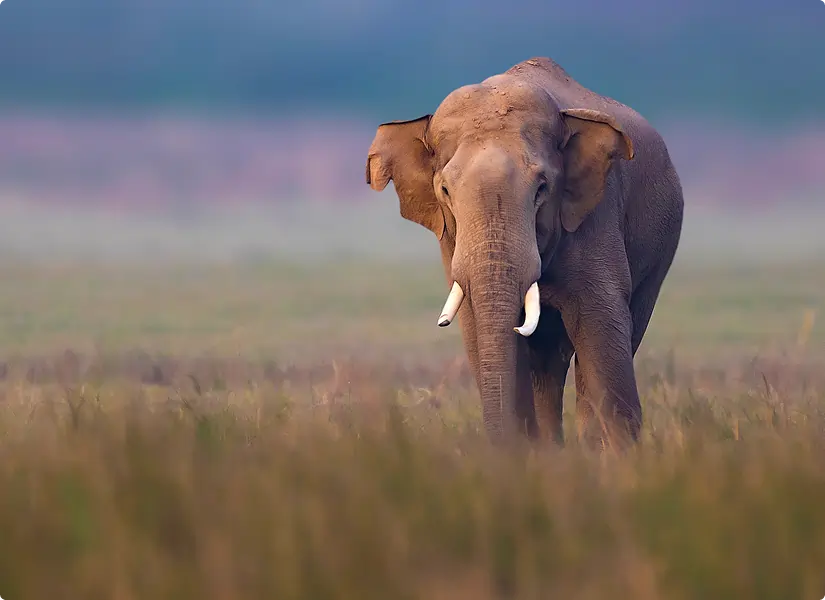
This morning is fairly relaxed with a a short excursion around the lodge followed by breakfast. We leave late morning with our packed lunch and tea to the Top Station area and Pambadum Shola National Park, one of the well protected pristine shola forests in the region. This area is well known for its Nilgiri Martin sightings. The drive to this area takes one about 1.5 hrs and crosses large lakes and pastures, and holds a great view of small population of high altitude elephants that have managed to thrive around Munnar town.
The shola forests are home to many interesting bird species like Scimitar and Dark Fronted Babblers, Square Tailed Bulbuls, Bluebirds, Nilgiri Wood Pigeons and Mountain Imperial Pigeons.
We return to the lodge in the evening. Overnight stay at Munnar.


- Day 11
Munnar – Thattekad
Early morning, we head to Rajamalai, the high peak located within the Eravikulam National Park. We access the area via non-polluting electrical vehicles keeping in mind the ecological sensitivity of the area. The grasslands, shola forests and the dense thickets of this hillside provide refuge for many interesting high altitude endemics. The trails are abundant with Nilgiri Tahr on either side, as we seek the White-Bellied Sholakillis, Painted Bush Quails, Palni Chilleppen, Nilgiri pipits and the prized catch, the Broad-Tailed Grassbird. We leave early for this excursion to ensure that we avoid the crowd. After a a satiable picnic breakfast, we carry on with our birding till late morning and then, return to the lodge.
Once we’re back, there’s time to freshen up and followed by checkout. We drive downhill, further into kerala, along the windward side of the mountains, as it takes us 1.5 hrs to reach the birding mecca of south India known as Thattekaad. On arrival, we check in, followed by lunch.
- Day 12 & 13
In Thattekad Bird Sanctuary
The Salim Ali Bird Sanctuary or the Thattekaad bird Sanctuary is located on the banks of the Periyar River amongst rubber groves and forests. Thattekaad is the only low land evergreen forest of India and is one of the best birding hotspots of the country. The 25 sq.km sanctuary supports over 300 species of birds, a good number of which are encountered only in the vicinity of this forest patch. The dense foliage, the thick undergrowth and the tall trees can make the viewing experience a bit challenginf in these forests but the local guides are skilled and adept at spotting to ensure that you have a fantastic wilderness experience in Thattekad.
Birding highlights here include diurnal species and also avian specialities of the night. Our wishlist include the Sri Lankan Frogmouth, the bird that put thattekad and the local bird guides on the map, the Srilankan Bay Owl, White-Bellied Tree Pie, Slaty Legged Crake, Great Eared Nightjar, Jerdon’s Nightjar, Southern Hill Mynas, Mottled Wood Owl, Flame Throated Bulbul, Oriental Dwarf Kingifisher and the Blue Eared Kingfisher. The watchlist aslo features migratory specials like the Black Baza, Square Tailed Drongo Cuckoo, Rusty Tailed Flycatchers and the Blue-Throated Blue Flycatcher are also often seen here. The loud drumming of the White-Bellied Woodpecker and the Rufous Woodpecker is omnipresent in these forests but seeking them can be challenging. The less vocal but mesmerising Heart Spotted Woodpecker is also a bird that requires a keen eye and a lot of patience.
At dusk, the Great-Eared Nightjars fly out of their roosts and their large raptor like wings and their slow steady wingbeat make for quite the visual treat. The Jerdon’s Nightjars are also seen in the same spot. Once darkness sets in, the guide will search for the Slender Loris, a small old-world insectivorous primate that becomes active at night. The walk to look for the loris is also a great way to look for the endemic Ceylon Bay Owl, Oriental Scops Owl, Hawk Owls and Nightjars.
Overnight stay in Thattekad.

- Day 14
Thattekad – Kochi
- Trip Inclusions
- Accommodation in Delhi and Mysore on Bed and Breakfast.
- All meals is included in Masinagudi, Kotagiri, Pollachi, Munnar and Thettkad.
- All transportation by Toyota Innova (3 pax per vehicle).
- Services of an expert Naturalist cum tour leader.
- Local guides / nature guides as per requirement.
- All entrances / safaris
- All sightseeing tours.
- All currently applicable taxes
- Trip Exclusions
- International and domestic airfare
- Still / video camera fee in the monuments and national parks.
- Expenses of personal nature like Tips, smokes, liquor, laundry and telephone calls.
- Travel insurance
- Anything not mentioned in the inclusions.
Experience of Excellence in Indian Wildlife Tourism
Celebrated 25 years in Jan 2025, marking decades of happy guests, 13,000+ trees planted, and impactful conservation efforts. We thank our expert Naturalists, trackers, hotel, and transport partners for their dedication. Committed to sustainable tourism, we will continue delivering exceptional wildlife experiences with the highest service standards.

- Journey extension
Your Journey, Your Choise


- The Experience, Through Their Eyes
Our Testimonials
Lilducky 81b4
Delhi
We were collected from the airport and taken to the train station for the train to Sawai Madhopur…
PQeverywhere
We were keen to engage a local ground operator to ensure we got the wildlife experience holiday we wanted. Not only did we get this across 3 wonderful National parks, but the connections, transport, and accomodation was first class. Like all success stories it’s the people that make it happen…
Richard Mawer
We have just returned from a fantastic 3 week/ 7 locations birdwatching tour in Southern India organised so well by Deepkul. The birding guides were remarkably experienced knowing all birds, their calls and habitats, keen to show us the endemics differing substantially in the various areas…


Why choose Nature Safari India?
- Journeys Curated by Experts
We at Nature Safari India focuses on creating bespoke wildlife safari tours tailored to your needs so that you will enjoy your dream vacation.
- India-wide naturalist depth
Our in-house naturalists are not just guides, they are storytellers of the jungle who will enhance your tiger safari experience in India.
- Seamless private planning
From touchdown to takeoff, your journey will be seamless. No surprises, no chaos, just peace of mind.
- Conservation with credibility
With our motto, “conservation through tourism” we focus on providing back to nature by supporting communities, protects tigers and more.
- Not just a trip, a dream come true
We believe in providing the best experience to our guests because this is not just a trip, but once in a lifetime journey.
- Beyond wildlife, tribal tales
Not just exploring wildlife, but you will get a chance to dive deep into India’s tribal culture, ancient traditions & heartfelt connection with villagers.
- Plan your wildlife safari in India
Get a quote for your private wildlife expedition in India
A senior naturalist reviews every enquiry and responds within 6 hours. Unlike automated booking platforms, every itinerary we send is handcrafted around your dates, parks and interests.
- 26+ years of arranging tiger safaris in central India
- Exclusive jeeps and in-house naturalists on every safari
- Maximized sighting chances - India holds 75% of the world's wild tigers - we put you in the right park and zone to see them
- Prefer to talk it through?
Sharad Vats — +91 98112 00094
[email protected]
170 reviews
53 reviews
78 reviews
- What to Expect, Clearly Explained
Frequently Asked Questions
Why should I go to India for Wildlife Safari in 2026?
India boasts unparalleled biodiversity across over 100 national parks, featuring iconic species like Bengal tigers, Asiatic lions, one-horned rhinos, elephants, sloth bears, and Indian leopards. In 2026, enhanced conservation, sustainable initiatives, and improved infrastructure make safaris much more accessible, affordable, and eco-friendly. Blend thrilling jeep tours in Kanha, Corbett, Pench, Ranthambore or Kaziranga with cultural tours for an unforgettable adventure. Choose solo, group, or private options, extendable to special interests like snow leopard expeditions, red panda quests, and birding tours.
Why should I take a tiger Safari India tour but not in other country?
There are 7 other countries besides India where the Tigers roam free. But India with a population of 4000+ tigers has about three-fourth of world’s wild tigers roaming in 50 tiger reserves. The sheer number of tigers in India increases the chances of sighting them substantially. Out of the 50 tiger reserves you have excellent chances of sighting tigers in at least 15 of them.
Which are the top 03 national parks for a tiger safari in India?
The top 3 national parks for tiger safari in India are Corbett National Park, Bandhavgarh National Park and Ranthambore National Park. To read a detailed review of the three, please read our blog on the Top 3 National Parks for Tiger Safaris in India. These we mention keeping in mind the consistency of tiger sightings over last 30 years.
Is an open jeep safe for a tiger safari India tour?
Yes, jeeps are safe for a tiger safari in India. The only point of understanding is that the jeep and its occupants must at all times maintain a safe distance from the wildlife around. If you hinder their space or peace, they might not like it and in turn leave the area. Always remember that you are in their territory and it is only basic courtesy to not disturb them. Do not get off your safari vehicle to click photos, do not feed them, and do not ask the driver/guide/naturalist to speed up to chase wildlife around. These are basic rules and any form of disobedience is strictly punishable.
What kind of clothes should I carry on a tiger safari India tour?
The temperature in Indian jungles experiences fluctuations throughout the day. During the scorching summer months of April and May, it can climb to a peak of 45 degrees Celsius, but it cools down to a pleasant 25 degrees Celsius in the evenings. In the winter season, from December to February, the mornings can be quite chilly, with temperatures dropping to as low as 0-5 degrees Celsius, but the days become comfortably warmer, ranging between 15-20 degrees Celsius. If you’re interested in learning more about tiger safaris in India and how these temperature changes can impact your experience, click here to read further.
For detailed blog post on the best time to visit national parks in India for tiger safaris.
What is the difference between a jeep and a canter on a tiger safari India tour?
A jeep is an open roofed car which is the most agile form of tiger safari within an Indian national park. It has the capacity to seat a naturalist (also your driver), a guide (as provided by the forest department) and 06 guests while on safari. A canter on the other hand is an open roofed mini bus which has the seating capacity of a driver, guide and 16-20 guests.
Which all documents are required by an NRI for experiencing tiger safari in India?
You will need 2 documents to have an experience of tiger safari in India and those are your passport and safari permits. Permits can be booked online through goverment websites. While booking your tiger safari permits, NRI’s must have their passports ready as you need to update the same on the website and don’t forget to carry your passport while going for the safari as the park officials check the same at the entry gates.
Its optional but important to carry a local identity proof like drivers licence with you as sometimes it is required to cross check your passport.
What is the average cost of a tiger safari tour in India?
The cost of a Tiger Safari in India varies significantly based on several factors, including the national parks you visit, the duration of your trip, the size of your travel group, your choice of accommodation (whether it’s 3-star or 4-5 star), and whether you opt for exclusive or shared jeep safaris, among other considerations.
How do I book a tiger safari in India?
You can book a tiger safari in India through a reputed wildlife travel company that arranges park permits, expert guides, and accommodations. Here is a quick comparison between the top 5 best tiger safari tour operators in India. Advance booking is highly recommended, especially for popular parks like Bandhavgarh, Corbett, Kanha, Pench & Ranthambhore.
Which company offers the best tiger safari in India?
The best tiger safari in India is often curated by companies with decades of wildlife expertise, in-depth park knowledge, and a network of naturalists. Look for companies offering tailor-made itineraries and consistently high guest ratings. At Nature Safari India we hold 30 years of experience organizing experiential tiger safari tours in the best national parks of India. read our testimonials or TripAdvisor page to know how our guests rate our services.
What is included when I book a tiger safari in India?
When you book a tiger safari in India, the package often includes park entry permits, jeep safaris, guide fees, accommodation, and meals. Some premium operators like Nature Safar India & Tiger Safari India also offer transfers, expert naturalists, and personalized services.
What makes the best tiger safari in India truly special?
The best tiger safari in India combines high tiger density parks, expert trackers, quality accommodations, and well-timed safaris. Personalised attention, responsible tourism, and seamless logistics set top experiences apart from generic ones.
With Nature Safari India, you get a special curated tour for your needs and schedule because we believe that your journey should be designed to cater your needs.
How many safaris should I plan to maximize my chances of seeing the tigers?
No one can predict a confirmed tiger sighting, but with the right combinations of naturalists, Jeep drivers, and park guides, the chances are better. To answer the question of how many safaris you should do to maximize tiger sightings, I can say a minimum of four tiger safaris is required at a national park. It will maximize your chances by giving you more time to explore more areas.
Are children allowed on tiger safaris, and if allowed how old should they be?
The safari hours are long, children of younger age get bored and may create noise, which is not good for safety as well as safari experience for the fellow safari goers, so only children above the age of five are allowed to go on a tiger safari.
Can we get a refund if we cancel a tiger safari in advance?
It depends on how many days before you cancel your safari. If you cancel it one month before, you will get a full refund except for the booking charges.
How fit do I have to be for a tiger safari?
A tiger safari is always conducted in a 4X4 vehicle, and there is no walking involved. If you are a person who can sit comfortably in an open vehicle for long hours, then you are perfect for the tiger safari.
However some national parks gives the experience of walking safaris for which you have to cover 4 – 5 miles (approx.)
Can I stay inside a national park during my tiger safari in India?
Yes, several national parks offer forest rest house and premium stays inside or near the core zones. Staying close enhances your chances of early morning and evening sightings during your tiger safari in India. Examples Corbett, Namdapha National Parks.